Introduction
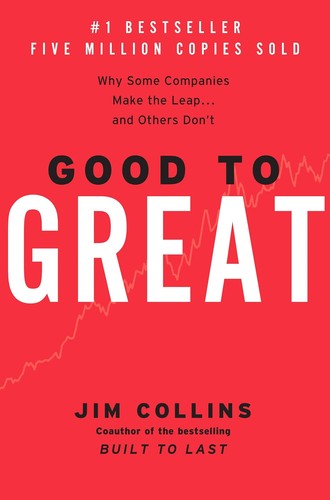
Good to Great: Why Some Companies Make the Leap... and Others Don't was published in October 2001 and has sold more than four million copies — making it one of the best-selling business books ever written. Jim Collins and his research team spent five years studying 1,435 Fortune 500 companies to find the eleven that made a sustained, dramatic leap from good performance to great performance, then held that position for at least fifteen years. The question driving the research was deceptively simple: what did the great companies do differently?
The book's opening line is its most famous: "Good is the enemy of great." The argument is that most organizations — and most people — never achieve excellence because good is comfortable. When things are working reasonably well, there is no urgency to make them dramatically better. The companies that went from good to great, Collins found, were led by people who refused to accept good as sufficient, who held themselves and their organizations to a higher standard, and who pursued that standard with a combination of fierce determination and clear-eyed pragmatism.
For founders, Good to Great is important for what it identifies about the characteristics of sustained excellence versus episodic success. Many companies have good years, or good decades. A much smaller number build organizations that remain excellent across multiple leadership transitions, economic cycles, and competitive disruptions. Collins's research identifies the structural factors — in leadership, talent, strategy, culture, and technology adoption — that distinguish the two.
The book was published in October 2001, just weeks after September 11, and became a bestseller during a period of economic uncertainty. Many readers found in Collins's framework a grounded, evidence-based antidote to the hype and superficiality of dot-com era business writing. The concepts Collins introduced — Level 5 Leadership, First Who Then What, the Hedgehog Concept, the Flywheel — entered the management vocabulary and have remained there for over two decades.
Who Should Read Good to Great?
Founders who are thinking beyond survival to sustainability. The book is not primarily about starting a company; it is about building one that lasts. The frameworks apply most directly to founders who have achieved some initial success and are asking how to translate that into sustained excellence rather than episodic performance.
CEOs and senior leaders of established companies who are trying to understand why their organization is performing adequately but not exceptionally — and what it would take to change that.
Investors and board members who want a framework for evaluating whether the companies they are involved with have the structural characteristics associated with sustained outperformance.
Anyone who has read Collins's earlier book Built to Last (1994, co-written with Jerry Porras). Good to Great was written partly in response to a question that Built to Last raised but did not fully answer: how did the visionary companies identified in that book become great in the first place? Good to Great addresses the origin story.
The book is less useful for very early-stage founders, where the primary challenge is finding product-market fit. Collins's frameworks apply to organizations that already have a functioning business model and are asking how to make it great rather than just good.
The Research Method
Collins's research methodology is worth understanding because it is what gives the book's claims their authority. The team began by screening the Fortune 500 list for companies that showed a specific pattern: at least fifteen years of cumulative stock returns at or below the general market, followed by a transition point, followed by at least fifteen years of cumulative returns at least three times the market. This is a demanding standard — the requirement of fifteen-year outperformance before and after the transition point eliminates luck and ensures that the results are not the product of a favorable industry environment.
From the Fortune 500 universe, eleven companies met the criteria: Abbott Laboratories, Circuit City, Fannie Mae, Gillette, Kimberly-Clark, Kroger, Nucor, Philip Morris, Pitney Bowes, Walgreens, and Wells Fargo. For each of these companies, Collins selected a comparison company from the same industry that had similar resources and opportunities but did not make the leap. The contrast between the great companies and their matched comparisons is where most of the book's insights come from.
The team conducted hundreds of interviews, reviewed decades of news coverage, analyzed financial data, and coded the findings systematically. Collins is explicit that the research did not start with hypotheses about what would make the difference — the team tried to let the data speak without imposing pre-existing theory. This approach gives Good to Great a credibility that most management books, which are primarily theory illustrated by cherry-picked examples, do not have.
Level 5 Leadership
The most surprising finding of the research was about leadership. Collins and his team expected to find that the great companies were led by bold, charismatic, media-friendly CEOs — the kind of larger-than-life personalities that dominate business coverage and executive hagiography. What they found was almost exactly the opposite.
Every great company was led by what Collins calls a Level 5 Leader — an executive who combined, in Collins's phrase, "extreme personal humility with intense professional will." These leaders were not modest about the company's ambitions. They were intensely demanding about performance, relentlessly focused on results, and completely unwilling to accept mediocrity. But they were remarkably humble about their own role in those results. They credited success to the team, to luck, to circumstances. They took personal responsibility for failures.
The comparison CEOs were, in many cases, exactly the charismatic, high-profile leaders that business culture celebrates. They attracted enormous media attention, made bold strategic pronouncements, and built their companies' identities around their personal brands. And they generally underperformed, often dramatically.
Collins's explanation is structural. A leader who builds an organization around their own personality creates a dependency: when the leader leaves, the organization struggles because it has been optimized for one person's presence rather than for enduring capability. A Level 5 Leader builds an organization that is greater than any individual, including themselves. Their ambition is for the institution, not for personal recognition.
The practical implication for founders is uncomfortable: the traits that make people effective founders — strong personal vision, high media profile, charismatic communication — are not the same traits that make effective leaders of enduring organizations. The transition from founder-as-visionary to Level 5 Leader is a personal transformation, not just an organizational one.
First Who, Then What
The second major finding concerns the relationship between people and strategy. Collins expected to find that great companies succeeded because they had the right strategy. Instead, he found that they succeeded because they had the right people — and that the question of who came before the question of what.
The great companies, Collins found, began their transitions by getting "the right people on the bus, and the wrong people off the bus" before deciding where the bus was going. This seems counterintuitive. Most management frameworks say: define the strategy, then build the team to execute it. Collins's research says the sequence is reversed. With the right people, you can figure out the right strategy. Without the right people, the best strategy in the world will not be executed.
The specific hiring principles Collins identifies in the great companies include: rigor about standards (they never compromised on hiring to fill a role quickly), willingness to act quickly on people who were wrong for the organization (once the fit was clearly wrong, they moved decisively), and commitment to keeping great people even when the specific role for them was not yet defined (they held onto excellent people even without a clear immediate need).
The parallel principle for letting people go is important. Great companies moved quickly on clear mismatches — not because they were harsh, but because keeping the wrong people was unfair to everyone: to the organization, which needed the seat to be filled by someone excellent, and to the person, who deserved to be in a role where they could excel.
The Hedgehog Concept
The most widely referenced framework from the book is the Hedgehog Concept, derived from the ancient Greek saying "The fox knows many things, but the hedgehog knows one big thing." Collins argues that great companies are hedgehogs, not foxes: they focus relentlessly on a single, well-defined concept rather than pursuing multiple strategies.
The Hedgehog Concept is the intersection of three circles:
What you can be the best in the world at. Not what you want to be the best at, or what you are currently best at, but what you have genuine potential to be the best in the world at. This requires honest assessment of your actual capabilities.
What drives your economic engine. What is the single financial metric that, if you could improve it substantially, would have the most significant positive impact on your financial performance? Collins calls this the "profit per X" denominator — for Walgreens, it was profit per customer visit; for Wells Fargo, it was profit per employee; for Nucor, it was profit per ton of steel.
What you are deeply passionate about. The organizations that built great performance were not neutral about what they did. They were genuinely motivated by it. Passion does not cause performance, but it sustains the long, difficult effort required to achieve and maintain excellence.
The Hedgehog Concept is not a strategy in the conventional sense. It is a deep understanding of what an organization can do better than anyone else in the world, what financial mechanism drives its success, and what it cares about enough to sustain effort over decades. Companies that have this understanding can make the thousands of small decisions that collectively determine whether an organization is excellent or merely adequate.
Walgreens is Collins's clearest example. The company identified that it could be the most profitable drugstore per customer visit — not the biggest drugstore chain, not the most famous pharmacy brand, but the most profitable on a per-visit basis. From this came a consistent set of decisions: locate stores at the most convenient corners in America (highest traffic, shortest visits), optimize the customer experience to maximize the value captured from each visit, expand only to locations that fit the model. Over twenty-five years, the discipline of that single concept produced stock returns fifteen times better than the general market.
The Flywheel Effect
Collins's metaphor for how great companies build momentum is the Flywheel: a heavy, massive wheel that requires enormous effort to start moving, but that builds momentum with each turn until it is spinning so fast under its own momentum that it seems to be moving effortlessly.
No single push starts the flywheel. No single breakthrough moment defines the transition from good to great. Great companies built their performance through consistent, disciplined effort in a coherent direction — year after year, pushing in the same direction, never thrashing or reversing course because things were not working fast enough.
The contrast is the doom loop: companies in the comparison group that tried to make the leap through a series of bold strategic initiatives, acquisitions, or reorganizations. When one initiative didn't produce immediate results, they abandoned it and tried something else. The result was organizational confusion, cynicism, and the loss of momentum that might have been building.
The flywheel is particularly relevant for founders because it argues against the common impulse to pivot, disrupt, or reinvent when results are not coming fast enough. Collins's data suggests that many of the comparison companies failed not because their strategies were wrong but because they did not pursue them long enough, consistently enough, to build the flywheel momentum that would have turned them into great companies.
Famous Quotes
"Good is the enemy of great."
"Greatness is not a function of circumstance. Greatness is largely a matter of conscious choice."
"First who, then what."
"The moment you feel the need to tightly manage someone, you've made a hiring mistake."
"A culture of discipline is not a principle of business; it is a principle of greatness."
"Stop doing lists are more important than to do lists."
What the Book Gets Right (and Where It Falls Short)
What it gets right:
The research methodology is genuinely rigorous, and the contrast between great companies and matched comparisons produces insights that are more persuasive than most management writing. The Level 5 Leadership finding, in particular, challenged a dominant assumption in business culture — that boldness and charisma are the primary predictors of great leadership — and has held up well.
The Hedgehog Concept is one of the most practically useful frameworks in business literature. The three-circle model forces a kind of honest self-assessment — about what you can actually be the best at, not just what you want to be the best at — that most strategic planning processes avoid.
The Flywheel metaphor captures something true about how organizations build momentum, and the contrast with the doom loop explains a pattern of failure that is immediately recognizable to anyone who has watched organizations thrash between strategies.
Where it falls short:
Several of the companies Collins identified as great have since experienced significant problems. Circuit City went bankrupt in 2008. Fannie Mae required a government bailout during the 2008 financial crisis. Wells Fargo's 2016 fake accounts scandal — in which the bank's employees opened millions of unauthorized accounts, driven by an aggressive internal sales culture — represents a serious failure of the Level 5 Leadership and culture of discipline that Collins identified as defining characteristics. These failures raise legitimate questions about whether Collins identified the causes of greatness or patterns that accompanied greatness during a particular historical period.
The book is also retrospective. Collins identified companies that had already achieved sustained greatness and worked backward to identify what they had in common. This methodology can identify correlation but cannot definitively establish causation. It is possible that some of the patterns Collins found — Level 5 Leadership, First Who Then What — were consequences of the companies' success rather than causes of it.
Finally, the book's primary evidence base is Fortune 500 companies over a specific historical period (roughly 1950–2000). The applicability of its findings to smaller companies, younger companies, or companies in industries that did not exist during that period requires translation.
How to Apply It
Audit your leadership for Level 5 characteristics. Honestly assess whether you — and the other leaders in your organization — are building for the institution or for yourselves. Are you crediting the team for successes? Are you taking personal responsibility for failures? Are your strategic decisions aimed at what is best for the organization, even when it is personally costly?
Apply the Hedgehog Concept as a strategic filter. Map your organization against the three circles: What can you be the best in the world at? What drives your economic engine (define the single most important financial metric)? What are you deeply passionate about? Where those three circles overlap is where you should concentrate resources. Where they do not overlap, you should be very cautious about investing.
Be disciplined about the flywheel. Identify the coherent direction your flywheel is turning in, and resist the impulse to change direction because results are not coming fast enough. The most common application failure of Collins's framework is using the doom loop — trying several strategies in quick succession — and then concluding that the Hedgehog Concept does not apply to your business.
Use the First Who principle when hiring. Before defining roles in detail, assess whether the person is right. Excellent people can figure out what needs to be done; average people cannot be turned into excellent performers through better role definition.
Frequently Asked Questions
What is the Hedgehog Concept in simple terms?
The Hedgehog Concept is the answer to three questions: What can we be the best in the world at? What do we care about deeply? What drives our financial performance? Great companies find the single answer that satisfies all three and focus on it relentlessly.
What is Level 5 Leadership?
Level 5 Leadership is a combination of fierce professional will — an intense, unwavering commitment to the organization's success — and personal humility — an absence of ego about who gets credit. Level 5 Leaders are not modest about standards; they are demanding. But they are modest about their own role, crediting the team for success and accepting personal responsibility for failure.
Why does Collins say "first who, then what"?
Because the great companies he studied got the right people before they had the right strategy. With the right people, strategy can be figured out. With the wrong people, the best strategy will not be executed. Collins argues that the most important decisions are hiring decisions, not strategic decisions.
Does the Flywheel concept mean you should never pivot?
Not exactly. Collins's argument is about consistency of direction, not rigidity of tactics. The comparison companies failed by changing strategic direction repeatedly — not by adapting their tactics. A startup that is learning from customer feedback and adjusting its product is not in the doom loop; a company that is replacing its entire strategy every eighteen months because the current one is not working fast enough is.
Related Books on Business Strategy and Leadership
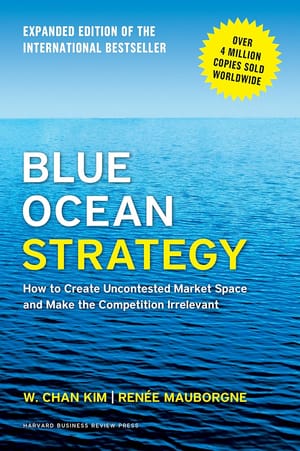
- Blue Ocean Strategy — W. Chan Kim and Renée Mauborgne on how to make competition irrelevant by creating new market space — a strategic framework that complements Collins's focus on execution and culture
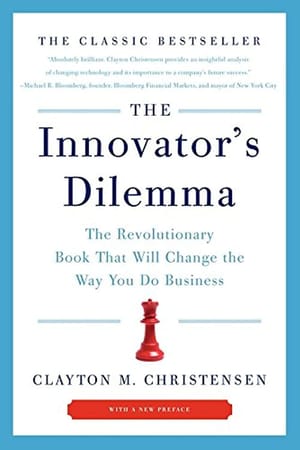
- The Innovator's Dilemma — Clayton Christensen on how great companies can fail through the very discipline and rigor that Collins identifies as their strengths
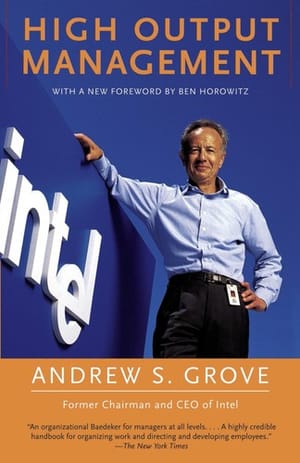
- High Output Management — Andy Grove's operational framework for building and managing teams — the execution complement to Collins's strategic frameworks