Introduction
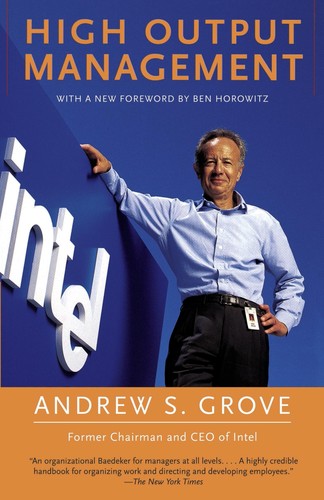
High Output Management was published in 1983, written by Andrew S. Grove — then president of Intel, later its CEO and chairman. It is not a book about strategy, vision, or the grand theory of business. It is a book about what managers actually do, measured with the same rigor Grove applied to semiconductor manufacturing. That precision is what makes it unusual. Most management books are either philosophical frameworks that never touch ground or war-story memoirs that resist generalization. Grove wrote an operating manual.
The book has had an unusually long afterlife. It fell out of print for a period, was rediscovered by the tech industry in the 2000s, and was officially republished in 2015 with a preface by Ben Horowitz, who credits it as the most important management book he has read. Horowitz's preface brought the book to a new generation of founders and operators who found that a text written for a chip company in 1983 described their problems with startling accuracy. The reason is that Grove abstracted the management problem to its essentials: how do you maximize the output of a group of people working together? That question has not changed.
For founders, the book is particularly valuable at the moment of transition from individual contributor to manager — the transition from doing work to multiplying others' work. This is the most difficult transition in a founder's career, and most founders make it badly. Grove gives you the conceptual framework and the specific tactics to make it deliberately.
Who Should Read High Output Management?
First-time managers who have been promoted from individual contributor roles. The book explains what the job of managing actually is — not in abstract terms, but operationally. Grove's insight that a manager's output is the team's output, not the manager's personal tasks, is the single most important reorientation for anyone stepping into their first management role.
Founders building their first team. The principles here apply to teams of two just as much as teams of two thousand. Understanding leverage, meeting design, and the one-on-one structure will make you a better manager before you have enough people to make the mistakes that most founders make at scale.
Experienced managers who feel their teams are underperforming and are not sure why. Grove's diagnostic framework — what are the highest-leverage activities in my role? am I spending time on them? — is a useful audit tool for any manager at any level.
Operators inside large companies who want to understand how to make their organizations more productive. Grove's production-system framing of knowledge work remains more practical than most modern management theory.
The book is less useful for founders who are still primarily individual contributors — it assumes you have at least one direct report and are grappling with the shift from making to multiplying.
The Core Framework: Managing for Output
Grove's central argument begins with an analogy that he sustains throughout the book: a manager runs a production process, just like a factory. The breakfast factory that opens the book — a model of how to think about throughput, limiting steps, and quality control in the context of making eggs, toast, and coffee — is not a gimmick. It is a demonstration that the logic of manufacturing applies wherever you have inputs, processes, and desired outputs.
The single most important sentence in the book is: "A manager's output = the output of his organization + the output of the neighboring organizations under his influence."
This definition is worth sitting with. It means a manager is not paid for what they personally produce. They are paid for what their team produces, plus the positive or negative effects their decisions have on other teams. A manager who is brilliant individually but who never multiplies the output of the people around them is a bad manager, by Grove's definition. A manager who personally produces little but who consistently makes the people around them more effective is doing exactly what the job requires.
From this definition follows the concept of managerial leverage. Not all management activities are equal. Some activities affect only you. Some affect one person. Some affect many people, or affect people for a long time, or affect the quality of decisions made by large groups. The highest-leverage activities are those that affect the most people over the longest time period. This is the framework Grove uses to evaluate how managers should spend their time.
High-leverage activities include:
- Training: a manager who trains well affects every person they train, for the duration of their career
- Setting direction and communicating strategy: clarity here affects every decision every team member makes
- Performance reviews: a well-done review affects an employee's trajectory for years
- Hiring: every person you add shapes what the team can do for years
Low-leverage activities include:
- Doing work that someone else on the team could do
- Attending meetings where you have no decision-making role and are not learning anything useful
- Producing outputs that have no effect on anyone else's decisions
Grove's prescription is not to eliminate all low-leverage activities — some are necessary — but to be deliberate about the allocation. Every hour spent on low-leverage work is an hour not available for high-leverage work. The manager's job is to find the highest-leverage activities and concentrate on them.
The One-on-One: Grove's Most Important Management Tool
Grove devotes significant attention to the one-on-one meeting — a regular, structured meeting between a manager and each direct report — and declares it the single most important tool a manager has. His prescriptions are specific:
Frequency: Weekly. Grove is not flexible on this. Monthly is too infrequent for the manager to stay current on what each person is working on and what problems they are encountering. Biweekly misses too much.
Duration: About an hour. Short enough to be sustainable, long enough to get past surface-level updates into substantive issues.
Ownership: The one-on-one belongs to the report, not the manager. The report is responsible for setting the agenda and bringing the things they want to discuss. The manager's job is to listen, ask questions, transfer information, and help with problems — not to run the meeting as a status update session.
Content: Grove describes the one-on-one as the forum where three things happen: the report tells the manager what they are working on and what they are struggling with; the manager learns what is actually happening at the ground level of the organization (information that otherwise becomes filtered and distorted as it passes through layers); and both parties have a sustained relationship that makes difficult conversations easier.
The structural point here is important. A manager who does not have regular one-on-ones has no reliable mechanism for knowing what is actually happening in their organization. They are managing based on what gets escalated to them — which is systematically distorted, because people escalate problems selectively and present them favorably. Grove's argument is that the one-on-one is the primary antidote to the information distortion that is endemic to large organizations.
Meetings as Production Processes
One of the most memorable arguments in the book is Grove's insistence that meetings are not an interruption to work — they are work. The framing matters because it changes how you think about them. If meetings are work, they should be designed like work: with clear inputs, clear processes, and clear outputs. If a meeting produces no output that affects any decision or action, it was not a meeting; it was a social event.
Grove distinguishes between two types of meetings:
Process-oriented meetings are the recurring, regularly scheduled meetings that keep an organization running: one-on-ones, staff meetings, operation reviews. These happen on a predictable schedule and serve ongoing coordination functions. They require discipline around preparation, attendance, and follow-through, but they are valuable precisely because they are predictable.
Mission-oriented meetings are called to produce a specific output: a decision, a plan, a problem resolution. Grove's concern is that these meetings are called too casually, attended by too many people, and end without a clear record of what was decided. He prescribes specific tactics: a clear purpose stated in advance, a limited attendee list (each additional attendee dilutes the quality of discussion and increases coordination cost), a designated decision-maker, and minutes that record what was decided and what follow-up is expected.
The broader point is that time in meetings is not free. Every person in a meeting room represents opportunity cost — those people are not doing other work. A manager's job is to make meetings expensive enough (in terms of design and preparation) to produce outcomes worth the cost.
Task-Relevant Maturity
One of Grove's most practically useful contributions is the concept of task-relevant maturity — the idea that the appropriate management style for any given employee depends not on the employee's general capability or seniority, but on their specific experience with the task at hand.
A very experienced engineer who is given a new responsibility — managing a team for the first time, building a product in a domain they have never worked in — has low task-relevant maturity for that specific task, even though they are a senior, capable person. That engineer needs more direction, more frequent check-ins, and more explicit feedback than they would need for tasks they have mastered. Giving them the same high-autonomy, low-intervention management style that works for their engineering work would be a mistake.
Conversely, a junior employee who has been doing the same task for two years and has mastered it has high task-relevant maturity for that task. Micromanaging them is not just inefficient — it is actively harmful, because it denies them the ownership that makes excellent work possible and signals distrust.
Grove's framework asks managers to calibrate along a spectrum from directive (high structure, explicit instruction, frequent check-in) to delegative (clear goals, autonomy over method, check-ins based on output rather than process) based on where each person is on the maturity curve for each specific task. This requires actually knowing what each person is working on and how experienced they are with it — which is why the one-on-one is not optional.
Performance Reviews
Grove argues that performance reviews are among the highest-leverage activities a manager can perform. A good review can fundamentally change someone's trajectory. A bad review — or no review at all — leaves people without the feedback they need to grow, and signals to the organization that performance is not being taken seriously.
His prescription for reviews is direct:
Be specific. General praise or general criticism is useless. A review should cite specific examples of behaviors, decisions, and outputs, and should explain why those things mattered.
Cover both performance and trajectory. Not just what someone did, but what it implies about where they are going. Is this person growing? Are they in the right role? Are there obstacles to their development that the manager has a responsibility to remove?
Do not avoid the hard things. The most common failure mode in performance reviews is the manager who softens negative feedback so thoroughly that the employee leaves the meeting not understanding that there is a problem. Grove is explicit: if someone is underperforming, they need to hear it clearly, with specifics, and with a clear statement of what needs to change and by when.
The review belongs to the employee. Like the one-on-one, the review is ultimately an investment in the other person. Its purpose is not to generate documentation for HR; its purpose is to help the person understand where they stand and what they should focus on.
Famous Quotes
"A manager's output = the output of his organization + the output of the neighboring organizations under his influence."
"The single most important task of a manager is to elicit peak performance from his subordinates."
"Managerial leverage measures the impact of a manager's actions on the output of their team."
"Training is, quite simply, one of the highest-leverage activities a manager can perform."
"The hard truth is that most performance problems are management problems."
"Your time is your most precious resource. How you allocate it determines what you actually value, regardless of what you say you value."
What the Book Gets Right (and Where It Falls Short)
What it gets right:
The production-system framing of management is genuinely clarifying. Most management writing is vague about what managers actually do. Grove is precise: managers produce output by influencing other people's work, and the quality of that influence can be measured and improved. This is a more tractable way to think about management than most alternatives.
The emphasis on meetings as designed work products rather than necessary evils is still underappreciated. Most organizations have terrible meetings not because meetings are intrinsically bad but because no one designs them with outputs in mind.
The task-relevant maturity framework is one of the most useful practical tools in management literature. It prevents the two most common errors: micromanaging experienced people and under-supporting novices.
The insistence on measurement — what are the indicators that tell me things are going well or badly before they become a crisis? — is deeply valuable and largely absent from contemporary management thinking.
Where it falls short:
The book was written in 1983 for a semiconductor manufacturing company, and some of the organizational examples reflect a different era of work. Knowledge work has evolved significantly since then, and the book does not address remote or distributed teams, asynchronous communication, or the specific challenges of modern software development.
Grove's approach to management is quite directive and control-oriented by contemporary standards. The emphasis on measurement and structured processes fits organizations where the work is relatively defined. It is less directly applicable to highly creative work — design, research, early-stage product development — where the outputs are harder to specify in advance.
The book also does not address the social and interpersonal dimensions of management with much depth. Grove's is a cognitive and structural model; the emotional intelligence literature that has developed since 1983 adds an important complement.
How to Apply It
Start with the one-on-one. If you manage anyone and you are not having regular weekly one-on-ones, that is the first thing to fix. Block recurring time, make clear it belongs to your reports, and commit to it consistently.
Audit your time against leverage. Look at how you spent your time last week. For each major activity, ask: how many people did this affect? How long will the effect last? Anything that affected only you is low-leverage by definition. Meetings you attended without a clear role are probably low-leverage. Prioritize the activities that affect the most people over the longest horizon.
Apply task-relevant maturity deliberately. For each person you manage, think specifically about each significant task they are working on. Are they new to this type of work or experienced? Adjust your level of direction accordingly — and be honest about whether you are managing based on what the task requires or based on what is comfortable for you.
Treat every performance review as a high-stakes intervention. Spend as much time preparing for a review as you would for an important client meeting. Have specific examples ready. Have a clear point of view on the person's trajectory. Be willing to have hard conversations.
Design your meetings. Before scheduling any meeting, know what the output is supposed to be. After every meeting, ask whether that output was achieved. If not, redesign the meeting or stop having it.
Frequently Asked Questions
Is High Output Management still relevant for modern startups?
Yes, more than most modern management books. The core framework — manager output equals team output, management is a leverage game, the one-on-one is the most important recurring tool — applies to any organization regardless of industry or era. The specific examples are dated, but the structure of the argument translates directly.
How does Grove's approach relate to OKRs?
Grove invented OKRs — Objectives and Key Results — at Intel, and the framework is implicit throughout the book even before he describes it explicitly. The idea is that managers should set clear objectives, define measurable key results that indicate whether those objectives have been met, and review them regularly. John Doerr, who worked at Intel under Grove, later spread OKRs to Google and beyond. The book is the original source material.
What is the right cadence for one-on-ones?
Grove prescribes weekly. That is the right default. For very experienced people working on stable, long-running projects, biweekly can work. For people who are new to a role or working on ambiguous, fast-moving problems, weekly is not enough — you may need daily brief check-ins during periods of high uncertainty.
Does Grove's framework apply to remote teams?
The principles apply; the tactics need adaptation. The one-on-one works over video call. The challenge with remote teams is the loss of ambient information — the casual conversations and hallway observations that help managers understand what is actually happening. Remote managers need to be more deliberate about information gathering, which usually means higher-frequency structured touchpoints.
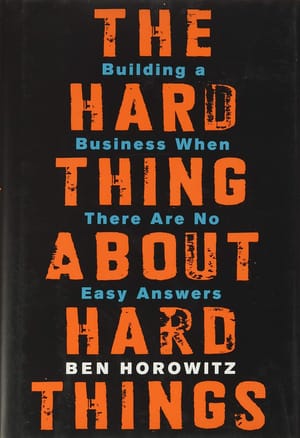
What is the book's relationship to Horowitz's Hard Thing About Hard Things?
Horowitz explicitly acknowledges Grove as his primary management influence. The two books are complementary: Grove focuses on the structure and mechanics of management — how to design the systems; Horowitz focuses on the hard psychological and interpersonal dimensions — how to make difficult decisions about people under pressure. Reading both gives you a more complete framework than either alone.
Related Books on Management and Leadership
- The Hard Thing About Hard Things — Ben Horowitz's complementary account of the emotional and interpersonal dimensions of leadership that Grove's structural framework does not fully address
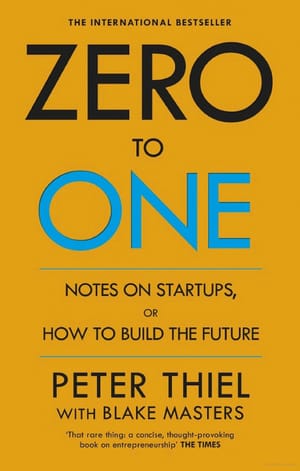
- From 0 to 1 — Peter Thiel on what to build and why; the strategic counterpart to Grove's operational focus
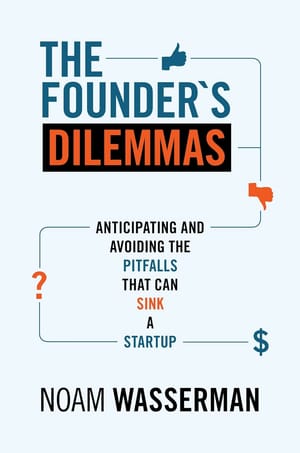
- The Founder's Dilemmas — Noam Wasserman on the structural decisions founders must make about team, equity, and roles — the stage before the management challenges Grove addresses
- No Rules Rules — Reed Hastings's evolution beyond Grove's framework: what happens when you take the talent density principle to its logical conclusion