What Is Blue Ocean Strategy?
Blue Ocean Strategy: How to Create Uncontested Market Space and Make the Competition Irrelevant (2005) by W. Chan Kim and Renée Mauborgne is one of the bestselling strategy books of all time, with over 4 million copies sold and translations into 46 languages. The book argues that the best way to beat the competition is to stop trying to beat the competition.
The metaphor is simple: red oceans are existing markets where companies fight over known demand, cutting prices and differentiating in incremental ways until the water runs red with competition. Blue oceans are uncontested market spaces created by companies willing to redefine the boundaries of an industry entirely. In a blue ocean, the competition is irrelevant because the rules of the game haven't been written yet.
The authors, both professors at INSEAD, spent 15 years studying 150 strategic moves across 30 industries spanning more than 100 years. Their finding was consistent: the most profitable and lasting growth came not from fighting competitors for a larger slice of existing demand, but from expanding the total pie by creating new demand in previously unexplored market space.
The book was updated with an expanded edition in 2015 and followed by Blue Ocean Shift (2017), which provides a more step-by-step implementation guide. Together they form the most comprehensive framework for non-competitive strategy available.
Who Should Read This Book
Founders in crowded markets who feel like they are grinding against well-funded competitors offering essentially the same product. Blue Ocean Strategy provides a structured way to ask: what if we stopped competing on the same dimensions and created value in a completely different direction?
Product managers and strategists at scaling companies who are tasked with finding new growth. The frameworks in this book — particularly the Strategy Canvas and Six Paths — are practical tools, not just concepts.
MBA students and business school readers who want to understand how strategic positioning actually works in practice, beyond the Porter five forces framework. Kim and Mauborgne challenge several assumptions that Porter's model takes for granted.
Entrepreneurs in service industries, consumer products, or SaaS where the customer experience can be redesigned from scratch. The Cirque du Soleil and Yellow Tail examples show how rethinking who the buyer is and what they actually value can unlock entirely new markets.
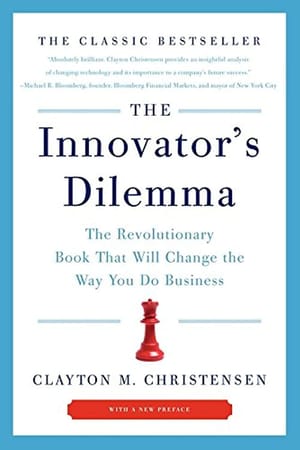
It is less suited to deep technology founders building infrastructure or platform products where the competitive dynamics are driven more by technical capability than by demand-side positioning. For that, The Innovator's Dilemma is a better framework.
The Core Framework: Red Oceans vs. Blue Oceans
| Red Ocean | Blue Ocean | |
|---|---|---|
| Competition | Compete in existing market space | Create uncontested market space |
| Demand | Exploit existing demand | Create and capture new demand |
| Value-cost | Make the value-cost trade-off | Break the value-cost trade-off |
| Strategy | Align with differentiation or cost | Align with differentiation AND cost |
The key insight is the last row. Conventional strategy assumes you must choose between being low-cost (like Walmart) or differentiated (like Nordstrom). Kim and Mauborgne call this the "value-cost trade-off" and argue it is a false constraint. Value innovation — the simultaneous pursuit of differentiation and low cost — is what creates blue oceans.
Cirque du Soleil is the canonical example. Traditional circuses competed on star performers, animal acts, and multiple show arenas. Cirque eliminated animals (expensive, controversial), reduced star billing (costly), and raised the theatrical production quality while adding an original story and artistic music — all borrowed from theatre and opera rather than circus. The result was a product that was cheaper to produce than a traditional circus but commanded premium ticket prices because it appealed to a completely different buyer: adults and corporate clients who would never go to a circus but would pay for sophisticated live entertainment.
The Four Core Analytical Tools
1. The Strategy Canvas
The Strategy Canvas is a diagnostic and action framework that visualizes where an industry competes and how much it invests across each competitive factor. On the horizontal axis are the factors the industry competes on (price, service, range, location, etc.). The vertical axis shows the offering level each competitor provides across those factors.
Plotting your own company and your key competitors on the canvas reveals two things: how similar everyone looks (the "red ocean" condition — convergence on the same factors), and where the opportunity lies to differentiate by changing what factors the industry takes for granted.
A strong blue ocean strategy produces a curve on the Strategy Canvas that is visually distinct from competitors — diverging meaningfully on the factors that matter to a new buyer group.
2. The Four Actions Framework (ERRC Grid)
To reconstruct buyer value, the authors propose four questions:
- Eliminate: Which factors that the industry takes for granted should be eliminated entirely? (Cirque eliminated animal acts)
- Reduce: Which factors should be reduced well below the industry standard? (Cirque reduced star billing)
- Raise: Which factors should be raised well above the industry standard? (Cirque raised theatrical production quality)
- Create: Which factors should be created that the industry has never offered? (Cirque created original story, artistic music, multiple show venues)
The ERRC grid forces you to both lower cost (by eliminating and reducing) and raise value (by raising and creating) simultaneously — which is how value innovation breaks the trade-off.
3. The Six Paths Framework
The Six Paths provide a structured way to look beyond your current industry for blue ocean opportunities:
- Look across alternative industries — what do buyers do before or instead of using your product? (NetJets looked across commercial flying and private jet ownership to create fractional jet ownership)
- Look across strategic groups within industries — why do buyers choose between different tiers? (Curves fitness looked across gyms and home fitness equipment)
- Look across the chain of buyers — who is the actual decision-maker vs. the user vs. the influencer? (Bloomberg shifted from buy-side traders to IT departments as the buyer)
- Look across complementary offerings — what happens before, during, and after your product is used? (NABI created school buses with features that reduced drivers' healthcare costs)
- Look across functional-emotional orientation — can you add emotional appeal to a functional industry, or strip the emotional frills from an emotionally-driven industry? (QB House reduced the emotional ritual of traditional Japanese barbershops to a functional 10-minute cut)
- Look across time — what trends are already underway that your industry hasn't yet incorporated? (Apple with iTunes looked at the digital music trend that Napster had revealed)
4. The Buyer Utility Map
Before committing to a blue ocean move, the Buyer Utility Map tests whether the idea actually offers exceptional utility to buyers. It maps the six stages of the buyer experience cycle (Purchase, Delivery, Use, Supplements, Maintenance, Disposal) against the six utility levers (Customer Productivity, Simplicity, Convenience, Risk Reduction, Fun and Image, Environmental Friendliness). The goal is to find where the current offering creates the most friction — and build the blue ocean strategy around eliminating that friction.
Real-World Examples
Cirque du Soleil. The canonical case. Created a new form of live entertainment that appealed to adults who wouldn't attend a circus, commanding theatre-level ticket prices at a fraction of the cost of a traditional circus by eliminating animals and multiple arenas.
Nintendo Wii. In 2006, Sony and Microsoft were competing intensely on processing power, graphics, and hardcore gamer features. Nintendo stopped competing on those dimensions and created a console for non-gamers: motion controls, simple interface, family-friendly games. The Wii outsold both the PlayStation 3 and Xbox 360 for years despite inferior hardware specs.
Southwest Airlines. While other airlines competed on class distinctions, meal service, and hub connections, Southwest eliminated all of that and raised the frequency and speed of point-to-point travel at car-comparable prices. It created a new buyer group: people who previously drove rather than fly.
Yellow Tail wine. Australian wine brand Casella Wines looked at why non-wine drinkers bought beer and cocktails instead of wine. They found wine was intimidating and complex. Yellow Tail eliminated tannin complexity, reduced the variety range to two, and created an easy, fruit-forward taste that tasted good to beer drinkers on first sip. They priced it at $7 and made wine the easy choice.
Apple iTunes. Music piracy via Napster revealed a huge latent demand for individual track purchases at low prices. Apple created the iTunes Store to address this demand legally — making it easier and more reliable than piracy while giving music labels a legitimate revenue model.
Memorable Quotes
"The only way to beat the competition is to stop trying to beat the competition."
"Value innovation is the cornerstone of blue ocean strategy. We call it value innovation because instead of focusing on beating the competition, you focus on making the competition irrelevant by creating a leap in value for buyers and your company."
"Companies need to go beyond competing. To seize new profit and growth opportunities, they also need to create blue oceans."
"Differentiation and low cost are not a trade-off but a logical consequence of value innovation."
"The strategic move, and not the company or the industry, is the right unit of analysis for explaining the creation of blue oceans and sustained high performance."
How Startup Founders Can Apply This
Start with the Strategy Canvas for your industry. List the 6-8 factors that players in your market compete on and where you and your competitors sit on each one. If your curve looks similar to competitors, you are in a red ocean. The exercise forces clarity about what you are actually competing on versus what you assume you are competing on.
Use the ERRC grid before you finalize your product. Before locking in your feature roadmap, ask what you can eliminate entirely (things competitors do but buyers don't actually value), what you can reduce (things you assumed were table stakes but aren't), what you need to raise, and what has never been offered. This often changes the product substantially.
Find the non-customer. Blue ocean strategy is often about finding buyers who are not currently in your market. Kim and Mauborgne identify three tiers of non-customers: those on the edge of your market who use your product minimally, those who have consciously chosen alternatives, and those who have never considered your market as an option. The third group is often the largest opportunity.
The Six Paths as an idea generation tool. Use the six paths as a structured brainstorming exercise with your team. For each path, ask what you would build if you were looking at your market through that lens. Path 4 (complementary offerings) and Path 3 (buyer chain) often surface the most actionable ideas for early-stage companies.
Criticisms and Limitations
The sustainability question. Blue oceans don't stay blue. Once a company demonstrates that a new market space is profitable, competitors will enter. The book's response — that value innovation creates strong brand loyalty that is hard to overcome — has not always held empirically. Yellow Tail was successfully imitated. Netflix's DVD-by-mail blue ocean was eventually competed away by Hulu, Amazon, and others.
Survivorship bias. The examples in the book are drawn from successful blue ocean moves. Many attempts to create uncontested market space fail because the new space turned out not to have sufficient demand. The framework doesn't give strong guidance on how to test whether a proposed blue ocean is real before committing significant resources.
Harder for B2B and enterprise. Most of the book's examples are consumer-facing. The buyer utility map and Six Paths are harder to apply in complex B2B sales cycles where the buyer, the user, and the decision-maker may be three different people with conflicting incentives.
Tension with lean startup thinking. Blue Ocean Strategy implies you already know what the new market space looks like before you build it. This conflicts with the lean startup's emphasis on validated learning and rapid iteration. Both approaches have merit; the tension between them is productive for founders to think through.
Frequently Asked Questions
Is Blue Ocean Strategy compatible with Porter's competitive strategy framework? They are complementary at different stages. Porter's framework — five forces, generic strategies, value chain — is most useful for understanding and competing in existing markets. Blue Ocean Strategy is useful for finding new markets where Porter's framework doesn't yet apply. Many strategists use both: Porter to understand the current competitive landscape, Kim and Mauborgne to find a way out of it.
How is Blue Ocean Strategy different from disruptive innovation? Christensen's disruptive innovation (from The Innovator's Dilemma) focuses on how entrants attack established companies from the low end of the market, using a cheaper and initially inferior product to capture ignored customers before moving upmarket. Blue Ocean Strategy is about creating new demand rather than capturing existing demand from different customers. The mechanisms are different: disruption works through technology trajectories and value networks; blue oceans work through redesigning buyer value. Both can result in new market spaces, but via different paths.
Can a small startup create a blue ocean, or is it only for large companies? The authors argue that strategic moves — not company size — are the relevant unit. The original Cirque du Soleil was a small Canadian troupe. Southwest Airlines started with three aircraft in three Texas cities. Yellow Tail was launched by a family-owned Australian winery with no U.S. distribution. The frameworks are scale-agnostic. What matters is whether you can identify a genuinely new value curve, not how many resources you have.
What is the difference between the original book and Blue Ocean Shift (2017)? Blue Ocean Strategy presents the concept, the research evidence, and the analytical tools. Blue Ocean Shift is a more implementation-focused follow-up, organized around a step-by-step process for executing a blue ocean move inside an existing organization. If you are trying to apply the frameworks inside a company with existing structures and politics, Blue Ocean Shift is the more practical starting point.
How It Compares to Other Strategy Books
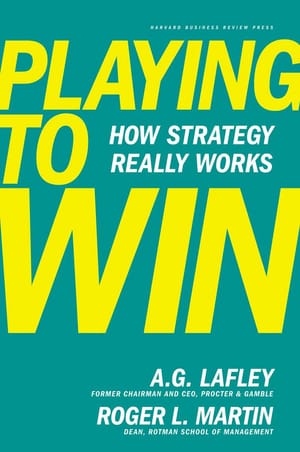
vs. Playing to Win by Lafley and Martin. Both books are about strategic choice, but from different angles. Playing to Win tells you how to win within a defined competitive space by making sharp choices about where to play and how to win. Blue Ocean Strategy tells you how to redefine the space itself. They are complementary: use Playing to Win once you have identified your blue ocean; use Blue Ocean Strategy to find it.
vs. The Innovator's Dilemma by Clayton Christensen. Christensen focuses on disruption from the supply side (what new technologies make possible). Kim and Mauborgne focus on the demand side (what buyers actually value that the industry ignores). Both result in new competitive spaces, but the mechanism and the starting point are different.
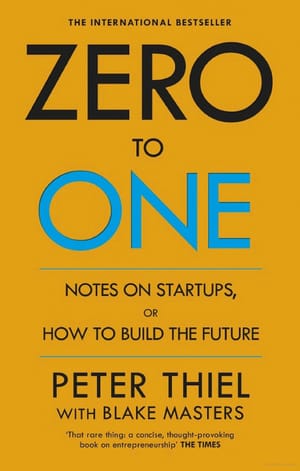
vs. Zero to One by Peter Thiel. Thiel argues for monopoly through radical technological innovation — doing something no one else can do. Kim and Mauborgne argue for monopoly through value innovation — combining what already exists in a new way that creates new demand. Thiel's approach is higher risk and higher reward; Blue Ocean is more accessible for founders without proprietary technology.