What Is The Everything Store?
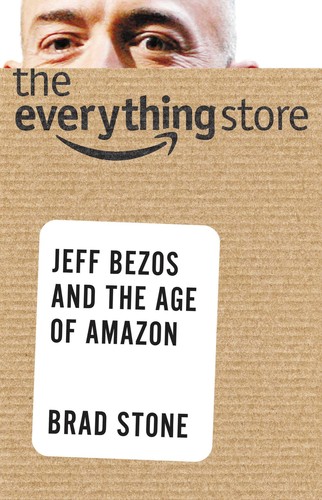
The Everything Store: Jeff Bezos and the Age of Amazon (2013) by Brad Stone is the definitive account of Amazon's founding, growth, and transformation from an online bookstore into the world's largest retailer and cloud computing provider. Winner of the Financial Times and Goldman Sachs Business Book of the Year Award for 2013, it draws on years of reporting, hundreds of interviews with current and former Amazon employees, and Stone's two decades covering Silicon Valley and Amazon specifically for Newsweek and Bloomberg Businessweek.
The book is not a corporate history in the hagiographic tradition. It presents Amazon and its founder with a combination of genuine admiration and unflinching reporting. The Amazon that Stone describes built something historically unprecedented — a company that changed how hundreds of millions of people shop, how virtually every startup deploys software, and how digital media is consumed — while doing it through a culture of extreme pressure, deliberate frugality, and an approach to supplier and partner relationships that many of the people on the receiving end describe as predatory. Both of these things are true, and Stone holds them in tension rather than resolving it neatly in either direction.
The Everything Store is required reading for anyone trying to understand how Amazon thinks, why it is structured the way it is, and what the underlying principles are that have guided its decisions for thirty years. The book is also, not incidentally, a biography of Jeff Bezos — one of the most interesting and least-understood major figures in the history of capitalism.
The Regret Minimization Framework and the Founding
Bezos left D.E. Shaw — one of the most prestigious quantitative hedge funds in the world, where he was a senior vice president — in 1994 to found Amazon. He was 30 years old and giving up a lucrative career at the peak of its trajectory. His explanation for this decision is one of the most widely cited frameworks in startup culture: the regret minimization framework.
The logic was simple. He imagined himself at 80, looking back at his life. Would he regret not having tried to build a company around the explosive growth of the internet? No matter how the venture turned out — whether it succeeded or failed — the attempt itself was something he would not regret. On the other hand, would he regret having stayed at D.E. Shaw to pursue financial security when the opportunity was there? Yes. He would wonder what might have happened.
Framed this way, the decision was obvious. He gave D.E. Shaw two weeks' notice, drove across the country with his wife MacKenzie, and wrote the first version of Amazon's business plan in the passenger seat.
The choice of books as the first product was not sentimental. Books were chosen for specific economic reasons: there were over three million titles in print at any given time, which meant a central warehouse could theoretically stock a selection far larger than any physical bookstore; books were a commodity item with standard sizes and simple shipping requirements; and the book market was large, fragmented, and served by distributors who would drop-ship to customers without requiring Amazon to maintain large inventory. Books were the product that best fit the initial thesis: that the internet's ability to aggregate selection and reduce transaction costs would create a new class of retail that could not be replicated in the physical world.
Customer Obsession as Organizing Principle
The most important idea in The Everything Store is customer obsession — the principle that has guided every significant Amazon decision from the beginning. Stone's reporting makes clear that this is not marketing language. It is the actual framework through which Bezos and Amazon evaluate every product, every service, every business decision.
The manifestation of customer obsession at Amazon is unusual in its specificity. It is not "be nice to customers" or "listen to customer feedback." It is a systematic commitment to the proposition that every decision should be evaluated from the perspective of the customer, not the perspective of the business. When Amazon evaluates a new feature, the question is not "does this help the business?" but "does this help the customer?" — on the assumption that what helps the customer will ultimately help the business, and that optimizing for the business at the expense of the customer is a short-term gain that creates long-term vulnerability.
This principle is why Amazon accepted years of near-zero margins while building Prime, its subscription service. Prime cost Amazon money in the short term — the free two-day shipping lost money on the margin. But it created a customer relationship that was more loyal, more habitual, and ultimately more profitable than the relationships that subscription-free customers had with Amazon. Customer obsession said: invest in the customer even when the immediate economics are unfavorable.
It is also why Amazon took the Kindle project seriously when it could have dismissed digital books as a threat to its physical book business. Bezos's explicit reasoning was that digital was going to happen to books regardless of what Amazon did — that the only question was whether Amazon would be the company that disrupted the book market, or whether it would be disrupted by someone else. Choosing to disrupt yourself — to cannibalize your own business before a competitor does — is one of the most difficult management decisions any company can make, and Amazon's execution of it with the Kindle is one of the most studied examples of that decision made correctly.
The Six-Page Memo and the Death of PowerPoint
One of the most distinctive Amazon management practices documented in The Everything Store is the narrative memo — the six-page document that replaced PowerPoint presentations for all significant business proposals. The story of how this practice came to be is instructive.
Bezos had become convinced that PowerPoint presentations were a form of intellectual laziness disguised as communication. A PowerPoint deck can make a bad idea look organized and professional. A six-page narrative memo — with full sentences, complete arguments, and explicit acknowledgment of assumptions — forces the writer to actually think through the idea rather than presenting a sequence of bullet points that gesture at thinking.
The practice Bezos instituted was unusual: at the beginning of every meeting about a significant proposal, attendees read the memo in silence. Nobody presents slides. Nobody summarizes. Everyone reads the actual document, and the meeting begins with actual discussion based on actual thinking, rather than a performance of thinking shaped by whoever prepared the presentation.
The discipline required to write a good six-page memo is substantial. It requires understanding the idea well enough to write it in prose, which means knowing what you actually think rather than hiding uncertainty behind bullets. It requires making explicit the assumptions on which the proposal rests, which means the assumptions can be challenged. And it requires imagining the finished product — the press release announcing the successful outcome — before a single line of code is written or a single dollar is invested.
This "working backwards" practice — writing the press release first, before building anything — is one of the most widely adopted Amazon management practices in the startup world. It forces clarity about what success looks like before you begin, which is the best possible foundation for deciding whether to invest.
AWS: The Accidental Revolution
One of the most important stories in The Everything Store is the founding of Amazon Web Services — the cloud computing platform that has become the most profitable part of Amazon and the infrastructure layer of the modern technology industry.
AWS was not invented as a product to sell to the outside world. It was invented because Amazon's own engineering teams were spending too much time building and maintaining infrastructure — the servers, storage systems, networking, and database management that every application requires — instead of building product features. The insight that Andy Jassy (who led the AWS development and would eventually become Amazon's CEO) brought to Bezos was that Amazon could solve this internal problem by building infrastructure as a standardized, programmable service, and that every other company had the same problem.
AWS launched externally in 2006 with Simple Storage Service (S3) and Elastic Compute Cloud (EC2). The products were primitive by later standards, but they represented something genuinely new: the ability to rent computing infrastructure on-demand, paying only for what you use, without any of the capital investment and operational overhead of owning your own servers.
The impact was enormous and rapid. Startups could now build products without owning hardware. The cost of experimenting with new ideas fell dramatically. Companies that would previously have needed to raise capital to buy servers could now launch on AWS for hundreds of dollars per month. AWS became the infrastructure layer of the startup ecosystem — the foundation on which Airbnb, Dropbox, Netflix, Slack, and thousands of other companies were built.
Stone's account of AWS's development captures the historical significance in a way that is easy to miss because the outcome is now so familiar. AWS represented the first time that infrastructure — the basic building blocks of computing — became a commodity service available on demand. This is the kind of change that happens rarely in the history of technology and has profound consequences that take years to fully manifest.
Bezos's Management Culture
The management culture that Vance documents in Elon Musk and Stone documents in The Everything Store share some qualities — extreme demands, intolerance for poor thinking, willingness to humiliate people in public — but the specific character of Bezos's management style is distinct.
Bezos is known for his "bar-raiser" approach to hiring: a designated interviewer, different from the hiring team, who evaluates whether the candidate would raise the average quality of the team if hired. The bar-raiser has veto power. The standard is not whether the candidate is good enough — it's whether they're better than average.
He is also known for the two-pizza team rule: no team should be larger than two pizzas can feed. This is not primarily a rule about pizza; it's a rule about organizational structure. Small teams are more agile, more accountable, and less prone to the meeting and coordination overhead that grows with team size. When a team gets larger than the two-pizza threshold, Bezos's prescription is to split it, not to manage it more carefully.
The culture of frugality Stone documents is also distinctive — Amazon famously kept expenses at a minimum, with practices ranging from using door desks (literal doors on sawhorses) for work surfaces to the absence of executive perks. Stone's reporting makes clear that this frugality is not purely performative; it reflects Bezos's genuine belief that spending money that doesn't benefit customers is a moral failure.
The Supplier Conflicts
The Everything Store covers extensively the conflicts between Amazon and its suppliers — publishers, manufacturers, and distributors who found that Amazon's market power gave it the ability to extract terms that threatened their economic viability. The book's account of Amazon's negotiations with book publishers, in particular, is one of the most detailed available documentations of how platform market power works in practice.
Amazon's approach to supplier relationships was explicit: Amazon's leverage was access to customers, and that leverage would be used to extract the lowest possible prices and the best possible terms for those customers, regardless of the impact on suppliers' economics. The "Gazelle Project" — named after Bezos's observation that Amazon should approach small publishers the way a cheetah approaches a weakened gazelle — is the most memorable specific example of this approach.
Stone's reporting on these conflicts is one of the book's most valuable sections for founders trying to understand how platform dynamics work. The book documents both Amazon's strategy and the suppliers' responses, and it raises genuinely difficult questions about the relationship between consumer benefit, competitive dynamics, and supplier welfare that have no clean answers.
What Founders Take Away
The Everything Store is most valuable for founders as a case study in the compounding advantages of genuine customer obsession maintained over decades. Amazon's dominance is not a product of any single innovation or any single competitive decision. It is the product of thirty years of consistent prioritization of customer value over near-term profitability — a prioritization that, over time, built customer trust, purchase frequency, and Prime membership into a flywheel that competitors cannot replicate without accepting decades of near-zero margins themselves.
The specific management practices documented in the book — the six-page memo, the working backwards process, the two-pizza teams, the bar-raiser hiring — are widely adopted in the technology industry precisely because they are teachable and implementable at any scale. Founders who adopt these practices report that they force the kind of clarity and accountability that larger organizations often lose, and that they scale more gracefully than conventional management practices.
The harder lesson — the willingness to accept short-term losses in service of long-term customer value, and to maintain that commitment even when it means years of near-zero margins and analyst skepticism — is not teachable in the same way. It requires a specific combination of conviction, courage, and the ability to communicate long-term thinking to investors who are by nature focused on near-term returns. Amazon's ability to maintain that commitment for as long as it did is one of the most remarkable organizational achievements in the history of business.