What Is Rework?
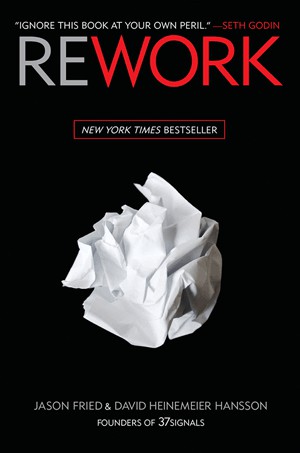
Rework (2010) by Jason Fried and David Heinemeier Hansson is the book that Silicon Valley's consensus most loves to dismiss and most needs to read. It is a 288-page argument against nearly every convention of modern business culture: long-term planning, formal meetings, outside funding, competitive obsession, and the glorification of overwork. Written by the co-founders of Basecamp — a software company that has operated profitably, without venture capital, with a small team, fully remote, since the late 1990s — it is not abstract theory. It is a description of how two people actually built a business that has lasted for over two decades while maintaining its values and culture.
Rework became a New York Times bestseller and has sold over two million copies worldwide, which is remarkable for a book that essentially tells its readers that most of what they've been taught about building a business is wrong. Its success reflects a genuine hunger for an alternative to the growth-at-all-costs, VC-dependent model of startup culture — an alternative that is profitable, sustainable, and humane.
The book is structured as a series of short, punchy essays — rarely more than a page or two each — each making a single argument in direct, confrontational prose. There are no elaborate frameworks, no case studies from McKinsey engagements, no interview-based research methodology. It's the opinions of two people who have built something real and are willing to tell you what they actually think.
Planning Is Guessing
One of the book's central arguments is a frontal assault on business planning as a practice. Fried and Hansson argue that the long-term business plan — a document that projects revenue, costs, and market position months or years into the future — is fundamentally dishonest. Not dishonest because the people who write it intend to deceive, but dishonest because it presents guesses as forecasts, assumptions as facts, and speculation as strategy.
The future is uncertain. Markets change. Customer needs evolve. Technologies emerge. The plan you write today will be wrong by next quarter in ways that are currently impossible to predict, and the organization that treats its plan as a commitment rather than a guess will be slower to adapt to reality than an organization that acknowledges the guesswork from the beginning.
The book's practical alternative: make the best decisions you can with the information you have right now. Set direction, not detailed plans. Revisit regularly. Be explicit about what you don't know. This is not an argument for thoughtlessness or randomness — it's an argument for intellectual honesty about the limits of planning, combined with a discipline of real-time decision-making based on current information.
Constraints as Competitive Advantage
Perhaps the most counterintuitive argument in Rework is that resource constraints — a small team, limited budget, no outside capital — are not disadvantages to be overcome but advantages to be leveraged.
The logic is compelling. A team with too much money, too many people, and too much time will build things that are too complicated, spend months in meetings debating options they could simply test, and accumulate organizational overhead that slows decision-making. A small team with limited resources cannot afford any of that. They must make faster decisions, build simpler products, focus on what actually matters, and cut everything that doesn't.
Fried and Hansson point to Basecamp as a case study. The product management tool has been built and maintained by a team that, at its peak, was smaller than the management team of many VC-backed startups with a fraction of Basecamp's user count. The constraint of a small team forced Basecamp to build a product that is simple, opinionated, and focused — which turned out to be exactly what a large segment of the market wanted.
The broader principle is that simplicity is a competitive advantage, and constraints are one of the most reliable generators of simplicity. You can't build a simple product if you have unlimited time and resources, because there's always someone who will argue for adding one more feature. Constraints force the question: what is the minimum we need to build to solve the customer's actual problem?
Meetings Are Toxic
The book's most quoted section is its indictment of meetings as a productivity-destroying practice. Fried and Hansson argue that most meetings are:
- Attended by more people than the decision actually requires
- Scheduled for longer than the problem takes to resolve
- Structured as status updates rather than decision-making sessions
- Unable to produce clear, actionable outputs because they involve too many people with conflicting perspectives and no clear ownership
The math on meetings is brutal: a one-hour meeting with ten people does not cost one hour. It costs ten hours of collective time, plus the cost of interrupting ten people's deep work, plus the coordination cost of scheduling, plus the follow-up communication to people who should have been informed but weren't in the room.
The alternative the book proposes is not no communication — it's asynchronous written communication as the default, with meetings reserved for genuine exceptions where real-time collaboration is necessary. If you need to make a decision, write down the situation, the options, and your recommendation, and let people respond in their own time. The quality of written communication is higher than verbal communication (it forces precision and permanence), the response can happen when each person is in a productive headspace, and there's a record of what was decided and why.
This philosophy was ahead of its time in 2010. The COVID-19 pandemic forced most knowledge workers to experience the asynchronous alternative to meetings, and many of them never went back.
Scratch Your Own Itch
One of the book's most useful pieces of founder advice is the principle of scratching your own itch — building a product to solve a problem you personally experience. Fried and Hansson's argument is not sentimental; it's practical. When you build a product for a problem you don't have, you're guessing at what customers want. When you build a product for a problem you have yourself, you are the customer — you know the problem intimately, you know what a good solution feels like, and you're motivated to solve it properly.
Basecamp was a scratch-your-own-itch product. 37signals (the predecessor to Basecamp) was a web design firm that needed a way to manage client projects — to track tasks, deadlines, file attachments, and client communication without the overhead of traditional project management software. They built Basecamp for themselves, noticed that it was better than anything else available, and started selling it to other small businesses with the same problem.
This pattern — the internal tool that becomes a product — is one of the most reliable templates in software startup history. Slack started as an internal communication tool for a game company. AWS started as Amazon's internal infrastructure platform. GitHub started as a tool for Linus Torvalds to manage the Linux kernel. The products built for real internal problems tend to be more focused, more opinionated, and more practically useful than products built by founders who have identified a market opportunity but don't personally use what they're building.
The Anti-VC Argument
Rework is one of the clearest articulations in startup literature of the case against venture capital as a default strategy for company building. Fried and Hansson's argument is not that VC is always wrong — they acknowledge that capital-intensive businesses, hardware companies, and certain types of network-effect-driven platforms may genuinely require outside funding. Their argument is that most software companies don't need VC, and that the ones that take it often regret the trade.
The trade, in their framing, is this: VC money buys growth speed at the cost of control, culture, and optionality. Once you've taken venture capital, you've accepted investors who have different objectives than you do. They need a 10x or 100x return to make their fund economics work, which means they need you to shoot for a very large outcome — even if you would be genuinely happy building a smaller, profitable business. They will push for growth even when growth damages culture. They will push for an exit even when you want to keep building. They have a portfolio perspective on risk that is fundamentally different from your company-specific perspective.
Basecamp has never taken venture capital. It is privately held, profitable, and structured to last rather than to exit. Fried and Hansson argue that this structure has been essential to maintaining the culture and values they care about — and that it has made them wealthier over time than a VC-funded exit to a large company would have.
Workaholism Is Not a Virtue
The book's attack on workaholism is one of its most valuable contributions to startup culture, and one of its most contested. Silicon Valley glorifies the 80-hour work week as a signal of commitment and competitive seriousness. Fried and Hansson argue that it is, in fact, a signal of poor time management, poor prioritization, and organizational dysfunction.
Their argument: if you need to work 80 hours a week to keep up with your job, something is wrong — either with your hiring (not enough people), your processes (too much organizational overhead), your priorities (working on things that don't matter), or your communication practices (too many meetings, too much coordination overhead, not enough asynchronous work). The answer to any of these problems is to fix the underlying issue, not to compensate for it by working more hours.
They also make a direct attack on the efficiency of overwork: research consistently shows that beyond a certain number of hours (roughly 50 per week for most knowledge workers), additional hours produce diminishing and eventually negative returns. Tired people make worse decisions, write worse code, and generate fewer creative insights than rested people. The 80-hour week is often producing less effective output per hour than a disciplined 40-hour week would.
What Founders Take Away
Rework is essential reading not as a universal prescription — its model of a small, bootstrapped, profitable software company is not the right model for every business — but as a counterweight to Silicon Valley's dominant ideology. It makes the case that there is more than one way to build something valuable, that the costs of the VC-funded growth model are real and often underacknowledged, and that constraints, simplicity, and profitability are underrated virtues in a culture that celebrates scale, complexity, and funding rounds.
For founders who are building software businesses in markets that don't require massive capital investment to achieve competitive scale, Rework offers a template that has proven durable: build something you need yourself, keep the team small, charge for it from the beginning, resist the urge to add features, and stay profitable. This model will never produce a billion-dollar IPO, but it will produce a business that survives, maintains its values, and generates genuine wealth for the people who built it.