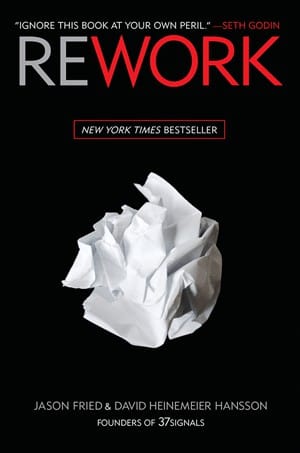
Jason Fried is the co-founder and CEO of Basecamp, the project management software company he has operated profitably and without venture capital since 1999. He is the author, with co-founder David Heinemeier Hansson, of Rework (2010) — one of the best-selling and most influential startup books of the past two decades. His philosophy of calm, profitable, bootstrapped software business has made him one of the most distinctive and contrarian voices in the startup world.
Fried grew up in Chicago and studied finance at the University of Arizona, graduating in the late 1990s just as the commercial internet was beginning to generate real business opportunities. He founded 37signals — later renamed Basecamp — in 1999 as a web design firm in Chicago, at a time when Silicon Valley's culture of venture funding and growth at all costs was becoming the dominant model for technology company building.
What makes Fried interesting as a founder is not the scale of what he built — Basecamp has never been valued at a billion dollars or produced a large IPO — but the durability and deliberateness of what he built. Twenty-five years after founding, Basecamp is still independent, still profitable, still run by one of its original founders, and still guided by the same core philosophy that shaped it from the beginning. In a world where most startups either fail, get acquired, or transform themselves beyond recognition in pursuit of growth, Basecamp's consistency is genuinely remarkable.
Basecamp appears in startup literature primarily through Rework and its predecessor Getting Real (2006). But the company also features in broader discussions of bootstrapping, remote work, and the alternatives to the VC-funded startup model.
The story of Basecamp's founding is one of the clearest illustrations of the "scratch your own itch" principle that Rework advocates. Fried and his team built Basecamp because they needed a project management tool that didn't exist — something simpler, faster, and more humane than the enterprise software then available. They built it in Ruby, which led their programmer David Heinemeier Hansson to build Ruby on Rails as a framework for the project, which was then open-sourced and became one of the most influential software tools in startup history.
The Basecamp story also appears in discussions of remote work. Fried was based in Chicago; Hansson was in Denmark. The company operated remotely before remote work was fashionable, and much of what Fried wrote in the early Signal v. Noise blog — about asynchronous communication, the costs of meetings, and the value of uninterrupted deep work — was based on direct experience managing a small distributed team across time zones and continents.
In the broader context of startup culture debates, Basecamp is the most frequently cited example of what a successful bootstrapped software company looks like. When founders or investors argue about whether VC funding is necessary for building valuable software companies, Basecamp is the reference point that challenges the assumption that it is.
The philosophy Fried has developed over twenty-five years of running Basecamp is most completely articulated in It Doesn't Have to Be Crazy at Work (2018), but its roots are visible in everything he has written and built since the beginning.
The core claim is that the default operating mode of most companies — constant urgency, always-on availability, growth-oriented stretch goals, open-plan offices, frequent meetings, and the glorification of overwork — is not a necessary cost of building something valuable. It is an organizational choice, and it is one that makes companies worse, not better.
Calm companies, in Fried's framework, are not companies that are less ambitious or less productive. They are companies that have made deliberate choices about how work happens: asynchronous communication as the default, meetings as the exception rather than the rule, realistic expectations about response times and availability, and goals that are achievable with sustainable effort rather than heroic overwork.
The evidence that this model works is Basecamp itself: the company has operated this way for over two decades, has maintained a high quality of product, and has produced revenue and growth without the dysfunction and burnout that characterize many high-growth startups. This is not a controlled experiment — there are too many variables to attribute Basecamp's success specifically to its calm culture — but it is a meaningful data point.
Fried has also been willing to experiment publicly with his model. In 2021, he announced several controversial workplace policy changes at Basecamp, including a ban on political discussions in the company's internal communication channels. The announcement generated significant criticism and led to the departure of a substantial portion of the company's staff. Fried maintained the policy, and Basecamp continued operating. The episode was a test of his commitment to his principles under pressure, and it was genuinely costly — but it also demonstrated that his model of company governance is not merely theoretical.
Several lessons from Jason Fried's career are particularly relevant for founders who are considering building software businesses.
Profitability from day one changes everything about what is possible. When your company charges customers from the beginning and manages costs so that revenue exceeds expenses, you have options that VC-funded companies don't have. You can choose not to grow faster than your culture can handle. You can turn down acquisition offers. You can change your product direction without investor approval. You can operate indefinitely without raising another round. Fried has used every one of these options at various points in Basecamp's history.
Constraints force better product decisions. The Basecamp product is opinionated and focused because a small team without unlimited resources cannot afford to build everything. This is not a limitation — it is the mechanism by which Basecamp's product is simpler and more focused than competing products built by larger teams with more money. For founders building software products, the discipline of constraint is one of the most reliable generators of product quality.
Remote and asynchronous work are not compromises. Fried built Basecamp remotely and asynchronously not because he had to, but because he found that it produced better outcomes. The absence of an office forced better communication infrastructure. The asynchronous default forced more deliberate, written decision-making. The distributed team forced clarity about expectations and priorities that co-located teams often skip. Founders who adopt remote-first practices often find that the constraints they impose produce organizational benefits that office-based companies struggle to replicate.
Longevity is underrated as a measure of success. The startup world tends to measure success in terms of funding rounds, valuations, and exit outcomes. Fried measures success in terms of how long you can build something you're proud of, in a way that sustains the people doing the building. By that measure, Basecamp — still independent, still profitable, still run by its founder after twenty-five years — is one of the most successful software companies in history.
Current: Co-founder and CEO of Basecamp
"Plans are guesses."
"Meetings are toxic."