Introduction
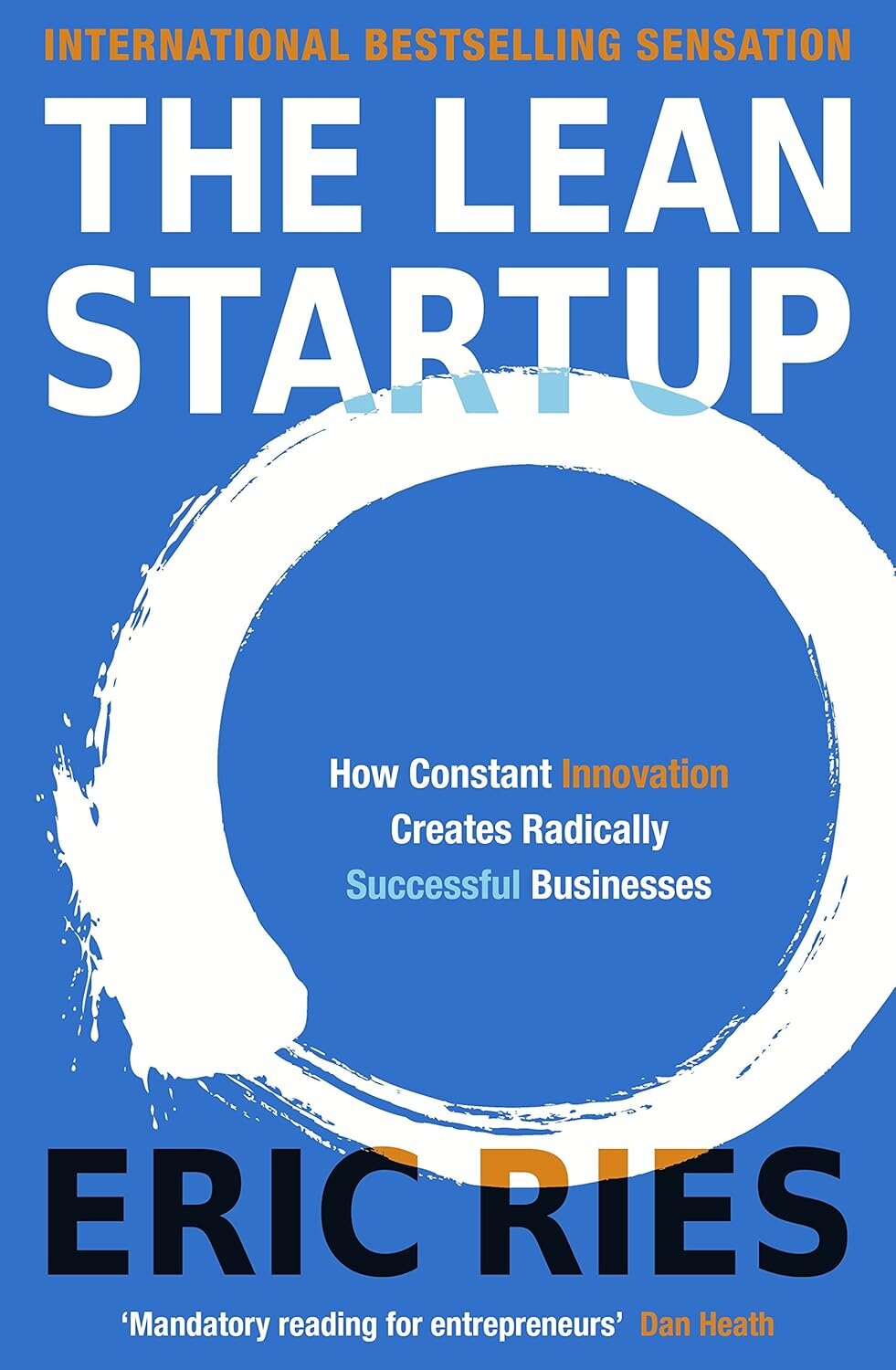
The Lean Startup: How Today's Entrepreneurs Use Continuous Innovation to Create Radically Successful Businesses was published in September 2011 and has sold more than three million copies. It is the most widely read book on early-stage product development in the world, required reading at hundreds of business schools, and a standard reference for startup teams at every stage from seed funding to Fortune 500 innovation labs.
The book's central argument is that most startups fail not because they build bad products, but because they build the wrong products — because they invest months or years in building something based on untested assumptions about what customers want, and discover their mistake only when they have already spent most of their capital and runway. The Lean Startup methodology is a systematic approach to testing those assumptions before burning resources on them.
Eric Ries developed the methodology while working as co-founder and CTO of IMVU, a social avatar platform that went through a series of painful failures before finding its model. The specific failures — building features customers did not use, optimizing metrics that did not correlate with business outcomes, making pivots based on intuition rather than evidence — became the source material for the framework. Ries synthesized insights from lean manufacturing (the Toyota Production System), customer development theory (developed by Steve Blank at Stanford), and agile software development into a unified methodology for building products under conditions of extreme uncertainty.
For founders, the book is most valuable as a diagnostic tool: it gives you a vocabulary and a framework for identifying why your product development process is failing, and a set of practices for replacing intuition-driven development with evidence-driven development.
Who Should Read The Lean Startup?
Pre-product founders who are deciding what to build. The MVP framework and the Build-Measure-Learn loop are most powerful when applied before significant investment in development. Reading the book before writing your first line of code will save you from the most expensive mistakes.
Founders who have built a product but are struggling to grow. The validated learning framework and the innovation accounting concepts are useful for diagnosing why growth is not happening and what assumptions need to be tested to find a path forward.
Product managers at larger companies who are trying to introduce more experimental, customer-driven approaches to product development. Ries explicitly addresses enterprise application of the methodology, and many of his examples are from innovation teams inside established companies.
Investors and advisors who want a framework for evaluating whether the startup teams they work with are learning efficiently. The validated learning framework provides a vocabulary for conversations about what constitutes real progress.
The book is less useful for founders in sectors where the product requirements are well-understood and the primary challenge is execution — manufacturing businesses, services businesses, businesses where regulation rather than customer uncertainty is the primary constraint.
The Build-Measure-Learn Loop
The core engine of the Lean Startup methodology is the Build-Measure-Learn loop: a structured, continuous cycle of building the smallest possible experiment, measuring what real customers actually do, and learning whether your assumptions were right or wrong. The goal is to go through as many of these loops as quickly as possible, with each loop either validating an assumption (allowing you to move on to the next unknown) or falsifying it (requiring a pivot to a different approach).
The order of the loop is important. Most development processes go: plan, build, measure. Ries argues that this order is wrong because it buries the most important step — learning — at the end, after you have already spent resources on building. The correct order, he argues, is: learn (what do we need to know?), measure (how will we know it?), build (what is the smallest thing we can build to generate that measurement?). The strategic thinking starts with the question of what you need to learn, works backward to what measurement would answer that question, and only then determines what product you need to build to generate that measurement.
This inversion has practical consequences. It changes what constitutes a good MVP — not "the smallest complete product," but "the smallest experiment that tests the most important assumption." It changes what constitutes good metrics — not metrics that are easy to generate, but metrics that directly answer the questions you most need to answer. It changes what constitutes progress — not features shipped, but validated assumptions.
Validated Learning
Validated learning is Ries's term for the unit of genuine startup progress. In conventional management, progress is measured in activity: lines of code written, features shipped, hours worked, money spent, revenue generated. Ries argues that none of these are genuine measures of progress for a startup, because a startup is not executing a known plan — it is searching for a viable plan. In a search, the only meaningful progress is learning: reducing the uncertainty about what the right plan is.
Validated learning is learning that is confirmed by real customer behavior. Not by customer surveys, focus groups, or interviews (though these can generate hypotheses worth testing). Not by manager intuition or founder conviction. By what customers actually do when confronted with the actual product.
The IMVU experience that grounds the book is a sustained illustration of the difference between validated learning and unvalidated learning. Ries and his co-founders at IMVU spent months building a feature they were convinced customers wanted — integration with existing instant messaging networks. Their reasoning was solid by conventional startup standards: customers already had their social graphs in existing IM networks; adding IMVU avatars to those conversations would lower the adoption friction. When they built and launched the feature, essentially no one used it. Customers who wanted a 3D avatar-based social experience were not trying to graft it onto their existing IM conversations. They wanted a new, separate experience. The assumption that had seemed obvious turned out to be wrong. The validated learning from that failure — about what customers actually wanted from a 3D social platform — was more valuable than the feature itself.
The Minimum Viable Product
The Minimum Viable Product is the concept from the book that has been most widely adopted and most widely misunderstood. The standard misunderstanding is that an MVP is a small, incomplete version of the product — the product with the minimum features required to call it a product. This misunderstanding leads to the "minimum" being minimized and the "viable" being defined by the founder's judgment about what is complete enough to ship, rather than by what is required to generate learning.
Ries's definition is different: the MVP is the version of the product that allows you to collect the maximum amount of validated learning with the minimum amount of effort. It is not about minimizing the product; it is about maximizing the ratio of learning to effort. The critical question is not "What is the minimum we can build and still call it a product?" but "What is the smallest thing we can build that will tell us whether our most important assumption is right or wrong?"
This definition allows for a wide range of MVP forms. The Dropbox explainer video — a demonstration of a product that did not yet exist, designed to measure whether potential customers would sign up for a waitlist — is a canonical example. The product had not been built; the MVP was a video. The learning it generated — that there was genuine demand — was validated by real customer behavior (signups), not by founder conviction.
The concierge MVP is another Ries-cited approach: manually doing, for a small number of customers, what the product would eventually automate. This tests whether the underlying value proposition is real without building the automation. If customers will pay for the manually-delivered version, the assumption that they want the outcome is validated; the remaining question is whether automation can deliver it efficiently enough to build a business.
Vanity Metrics vs. Actionable Metrics
One of the most practically useful sections of the book is Ries's distinction between vanity metrics and actionable metrics.
Vanity metrics are numbers that feel good but do not tell you whether your business is working: total registered users, total page views, total downloads, total revenue (before accounting for customer acquisition cost). These numbers go up when you do almost anything — they go up when you run a PR campaign, when you change your landing page copy, when you get a tech blog to write about you. They feel like progress because they are growing. They do not tell you whether you have a sustainable business.
Actionable metrics are numbers that directly measure the health of your business model: activation rate (of the users who sign up, what percentage complete the key action that indicates they understand the product?), retention rate (of users who activate, what percentage are still active 30/60/90 days later?), revenue per user (after accounting for acquisition cost), and customer lifetime value. These metrics tell you whether the fundamental dynamics of your business are working.
The specific actionable framework Ries recommends is cohort analysis: rather than looking at total user numbers, look at what each cohort of users (users who signed up in a given week or month) does over time. Cohort analysis reveals whether the business is getting better or worse at its core dynamics, which total numbers obscure.
Innovation Accounting
Innovation accounting is Ries's framework for measuring startup progress in a way that is honest about the fundamental uncertainty of the early-stage product development process. The three components are:
Establish a baseline. Build an MVP and measure current reality: what are the conversion rates, retention rates, and revenue per user actually producing? This is often humbling — the baseline is almost always worse than founders expect, and worse than they have been reporting to investors in their optimistic projections.
Tune the engine. Make improvements to the product based on what you learned from the baseline measurement, and measure whether they moved the metrics in the right direction. This is the learning phase: each improvement attempt either validates (the metric moved) or falsifies (the metric did not move) an assumption about what is driving customer behavior.
Pivot or persevere. After a series of tuning attempts, evaluate honestly whether the baseline metrics are improving toward the benchmarks that would indicate a viable business. If they are, persevere — the strategy is working. If they are not, pivot — the strategy needs fundamental revision.
The Pivot
The pivot is one of the most widely misused concepts in startup culture. In Ries's original formulation, a pivot is a specific kind of structured course correction: a change in strategy that preserves the validated learning from the previous strategy while testing a new hypothesis about a better path forward.
Ries identifies several types of pivots: a zoom-in pivot (a feature becomes the whole product), a zoom-out pivot (the whole product becomes a feature of a larger product), a customer segment pivot (the product is right but you are targeting the wrong customers), a customer need pivot (the problem you identified is real but not the one the customer most needs solved), a platform pivot (from an application to a platform), a business architecture pivot (from high-margin/low-volume to low-margin/high-volume or vice versa), and a value capture pivot (changing the revenue model).
The common misuse is treating any change in direction as a pivot. Pivots are costly — they require rebuilding assumptions, re-engaging customers, and often rebuilding significant portions of the product. The decision to pivot should be treated as a major strategic decision, not as a casual response to a bad quarter.
Famous Quotes
"The only way to win is to learn faster than anyone else."
"Success is not delivering a feature; success is learning how to solve the customer's problem."
"A startup is a human institution designed to create a new product or service under conditions of extreme uncertainty."
"Validated learning is the unit of progress for a startup."
"The lean startup is not about being cheap. It is about being less wasteful and still doing the things that are necessary."
"The question is not 'Can this product be built?' but 'Should this product be built?'"
What the Book Gets Right (and Where It Falls Short)
What it gets right:
The core insight — that startups fail primarily by building the wrong things rather than by building things badly — is both empirically supported and practically actionable. The MVP concept, properly understood, is one of the most valuable product development tools available to founders.
The distinction between vanity metrics and actionable metrics is important and widely misunderstood. Most early-stage teams optimize for numbers that feel good rather than numbers that reveal whether the business is working.
The pivot framework gives founders a structured way to think about when to change direction, which is one of the hardest decisions in startup life. The specific taxonomy of pivot types is useful for diagnosing what, precisely, needs to change.
Where it falls short:
Thiel's critique — articulated in Zero to One — is the most pointed: the lean startup methodology can lead founders to over-optimize for what customers say they want today, at the expense of building something genuinely new that customers do not yet know they want. The methodology is most powerful for products that are evolutionary improvements on existing behaviors; it is less well-suited for genuinely novel products where customer feedback is noise rather than signal.
The book also sometimes overstates the degree to which the methodology eliminates failure. The Build-Measure-Learn loop tells you what is not working; it does not guarantee that you will find what is working within the constraints of your capital and runway.
Finally, the emphasis on speed — minimize the time through each Build-Measure-Learn loop — can produce a culture of shallow learning. Fast cycles of small experiments can miss insights that are only available from sustained, deep engagement with customers.
How to Apply It
Define your most important assumption. Before building anything, write down the single assumption that, if wrong, would invalidate your entire business model. Design your first MVP to test that assumption.
Separate vanity metrics from actionable metrics. For your current product, identify one actionable metric that directly measures whether your core value proposition is working. Make it the primary metric your team reports and discusses.
Set learning milestones, not feature milestones. In your next sprint or planning cycle, define what you will learn, not just what you will build. What assumptions will be tested? How will you know if they are right or wrong?
Use cohort analysis. If your product has been live for more than a few months, look at your metrics by cohort — users who joined in a given month — rather than total numbers. The cohort view will show you whether your product is getting better or worse over time in ways that total numbers obscure.
Frequently Asked Questions
What is the Build-Measure-Learn loop?
The Build-Measure-Learn loop is the core cycle of the Lean Startup methodology: build the smallest possible experiment (the MVP), measure what real customers actually do in response to it, and learn whether your assumptions were right or wrong. The goal is to go through this loop as many times as possible as quickly as possible.
What is an MVP?
An MVP — Minimum Viable Product — is not a small version of the product. It is the smallest experiment that will tell you whether your most important assumption is right or wrong. The defining question is not "What is the minimum we can ship?" but "What is the smallest thing we can build to generate the learning we most need?"
What is validated learning?
Validated learning is learning that is confirmed by real customer behavior. It is the only genuine unit of startup progress in Ries's framework. Features shipped, code written, and hours worked are not progress; assumptions tested and either validated or falsified are progress.
How does The Lean Startup relate to Zero to One?
The two books represent a genuine tension in startup thinking. Ries argues for hypothesis-driven, customer-feedback-driven development. Thiel argues that the best companies are built by founders who have strong prior beliefs about what the world should look like and who build toward that vision despite what current customers say they want. Both positions contain important truths; which is more relevant depends on what you are building.
Does the Lean Startup methodology apply to large companies?
Ries argues yes, and his follow-up book The Startup Way (2017) addresses enterprise application in detail. The methodology applies to any team working under conditions of extreme uncertainty about what to build — which includes innovation teams inside large companies. The organizational context is different, but the core loop is the same.
Related Books on Entrepreneurship and Product Development
- From 0 to 1 — Peter Thiel's counterpoint to the Lean Startup: the case for founder vision over customer feedback iteration, and why the biggest breakthroughs come from conviction rather than experimentation
- High Output Management — Andy Grove on how to build and manage teams — the operational complement to Ries's product development framework
- The Hard Thing About Hard Things — Ben Horowitz on the psychological and organizational challenges of building a company, which the Lean Startup methodology does not address