Introduction
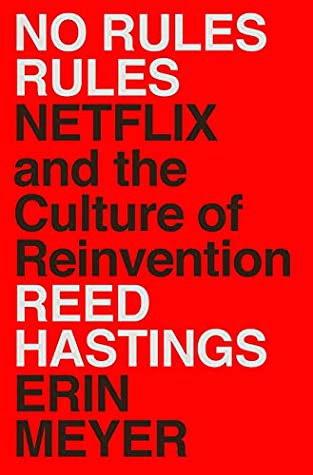
No Rules Rules: Netflix and the Culture of Reinvention was published in September 2020, co-written by Reed Hastings and organizational theorist Erin Meyer. It is the full elaboration of an argument that Netflix had been making for over a decade in a publicly available internal document: the Netflix Culture Deck, first published in 2009. Sheryl Sandberg called the Culture Deck "the most important document ever to come out of Silicon Valley." No Rules Rules is the book-length version, with the reasoning made explicit and the context provided.
The book matters for two reasons. First, it describes a management philosophy that is genuinely unusual — not just different in tone or style from mainstream management advice, but different in structure. Most management writing recommends adding systems, processes, and controls as organizations scale. Hastings recommends removing them. Second, it was written by someone who has actually run an organization of tens of thousands of people using these principles, which makes the unusual claims defensible in a way they would not be from a consultant or researcher.
For founders, the book is most valuable at the moment when their startup begins to feel bureaucratic — when the first approval processes appear, when people start asking permission for things they used to just do, when the culture that made the early team effective starts to erode under the weight of growth. Hastings's argument is that this erosion is not inevitable; it is a choice. And the alternative is available to any organization willing to do the hard work of building talent density first.
Who Should Read No Rules Rules?
Founders who are scaling past 20–30 people and are beginning to feel the friction of coordination. The book's prescriptions are most applicable at this stage, when culture is being codified and the habits of organizational life are being set.
HR and People leaders who are rethinking performance management, compensation design, or vacation policy. Hastings provides specific, well-reasoned arguments for why many standard practices — performance improvement plans, expense approval processes, formal vacation policies — are solutions to the wrong problem.
Operators at large companies who are frustrated by bureaucracy and want conceptual ammunition for why it is counterproductive. The book provides the argument in a form that is easy to share and discuss.
Anyone who enjoyed High Output Management and wants to see what happens when you take Grove's talent-density argument to its logical endpoint. Hastings builds explicitly on Grove's influence.
The book is less suited to founders in the very earliest stages — pre-product-market fit, one to five people — where the primary challenge is not culture design but survival. It is also less directly applicable to businesses with heavy regulatory requirements or where standardization is a genuine competitive advantage.
The Foundation: Talent Density
Hastings opens with a story about the early Netflix layoffs. In 2001, after the dot-com crash, Netflix was forced to cut a third of its workforce. The result surprised him: the smaller team, which he expected to be demoralised and less capable, turned out to be significantly more effective. Projects moved faster. Decisions were better. The people who remained were energised rather than depressed.
The insight Hastings drew from this experience is the book's foundation: talent density. A team of ten exceptional people is not just slightly more effective than a team of fifteen average people — it is qualitatively different. The exceptional team can eliminate many of the coordination costs, approval processes, and management overhead that exist primarily to prevent mistakes by people who are not excellent. When everyone on the team is excellent, you do not need as many systems to catch errors; the people catch them themselves.
This leads to the first and most controversial of Netflix's cultural commitments: pay top of market for every role. Not market rate. Top of market. Netflix's theory is that the cost of a great engineer or a great designer is not two or three times the cost of an average one — the output gap is far larger than the pay gap. Paying a great person 50% more than the market rate for their role is a bargain if their output is five times better than the average. Paying two average people less than one great person costs more in total and produces worse work.
The corollary of paying top of market is removing people who are no longer performing at that level. Netflix does not believe in the standard performance improvement plan — a structured process of warnings, documented improvement goals, and final decisions. The keeper test is the mechanism instead: managers should continuously ask, "If this person told me they were leaving for a competitor, would I fight hard to keep them?" If the answer is no, the person should be let go with a generous severance package, immediately, before further time is wasted. This is not punitive; it is a recognition that someone who is no longer excellent in their current role might be excellent elsewhere, and that keeping them in a role that is wrong for them helps no one.
Radical Candor: Feedback as a Professional Responsibility
The second pillar of Netflix culture is what Hastings calls radical candor — the expectation that employees at every level will give and receive honest, direct feedback. Not as a personality trait or a cultural preference, but as a professional obligation.
Netflix's mechanism for this is the "live 360" — an ongoing practice of giving real-time feedback, not waiting for a formal review cycle. The specific format is the "4As" of feedback: feedback should be aimed at Assisting the recipient (not venting, not scoring points), it should be Actionable (specific and concrete), it should be Appreciated (the giver thanks the receiver for listening), and it should be Accepted (the receiver thanks the giver for the honesty, even if they disagree).
The justification for radical candor is systemic rather than just interpersonal. In a high-talent-density organization, most people are capable of handling honest feedback and improving based on it. The cost of withheld feedback — errors that persist, strategies that go unchallenged, assumptions that are never tested — is higher than the social discomfort of hearing difficult things. Netflix explicitly trains managers to give feedback that most companies would consider harsh, and explicitly trains employees to receive it without defensiveness.
Hastings acknowledges the genuine tension here. Radical candor can become a permission structure for unkindness. The 4As framework is partly an attempt to guard against this — to distinguish feedback that is aimed at improvement from criticism that serves only the ego of the critic. But the more important safeguard, in his account, is the talent density itself: excellent people tend to be secure enough to receive criticism and generous enough to give it constructively.
Freedom and Responsibility
The phrase "freedom and responsibility" is at the center of the Netflix Culture Deck and at the center of the book. Hastings's argument is that these two things are not in tension — they are mutually reinforcing. You can give people extraordinary freedom because they are extraordinarily responsible. You can trust people to be responsible because they have been given the freedom that makes responsible behavior meaningful.
The specific freedoms Netflix extends are extensive: no vacation policy (unlimited time off, with no requirement to track or report it), no expense policy (employees are expected to spend company money as if it were their own), no approval requirements for most decisions. The book is explicit that these are not just nice-to-haves. They are statements about what the company believes about the people it employs. A company that requires employees to submit expense reports for approval is saying, implicitly, that it does not fully trust those employees. In a high-talent-density organization, that distrust is both insulting and counterproductive.
The freedom also extends to strategic context. Netflix managers are expected to share business context — strategy, competitive intelligence, financial performance — with their teams much more openly than most companies do. The theory is that employees who understand the full picture make better decisions, because they can align their individual choices with what the company actually needs. An employee who does not understand why the company has chosen a particular strategy will optimize for the wrong things, not out of bad intentions but out of incomplete information.
Context, Not Control
Grove's influence on Hastings is most visible in the concept of context over control. Grove argued that the highest-leverage management activities are those that set context — communicating strategy, setting goals, explaining the reasoning behind decisions — rather than those that control execution. Hastings extends this into a full management philosophy.
The Netflix version is: managers should be able to explain what success looks like, why it matters, what constraints exist, and what resources are available. Having done that, they should get out of the way. Decision-making authority should sit with the person who has the best information and the clearest stake in the outcome — usually not the manager.
Hastings's memorable phrase for what this looks like in practice is "leading with context, not control." A manager who is leading with control says, "Do it this way." A manager who is leading with context says, "Here is what we are trying to accomplish, here is why, here is what I know about the constraints — now you decide how to proceed." The context-setting manager is more demanding in some ways: they have to know enough to set context accurately, and they have to be willing to be accountable for outcomes they did not directly control. But the payoff is an organization that makes good decisions without requiring approval chains.
The Keeper Test
No single idea from the book has spread as widely as the keeper test, and it is worth examining what it actually implies. The test is: "If this person told me they were leaving for a competitor, would I fight hard to keep them?" The answer should be yes for everyone on your team. If it is not yes for someone, that person should not be on your team.
What the test does is force managers to be honest with themselves about whether the people they manage are truly excellent or merely adequate. Most managers avoid this question because the consequences are uncomfortable. The keeper test makes the consequences explicit: if you would not fight to keep someone, you have two choices — develop them to the point where you would fight to keep them, or let them go generously.
Hastings is clear that the generous severance is not optional. Netflix pays generously on the way out — significantly more than the legal minimum — precisely because the keeper test creates situations where people are let go for reasons that have nothing to do with misconduct or incompetence. They are being let go because the standard in this organization is excellent, and they are only good. Generous severance is the acknowledgment that being good is not a failure; it is just not what Netflix needs.
Famous Quotes
"The best managers figure out how to get great outcomes by setting the context, rather than trying to control their people."
"Adequate performance gets a generous severance package."
"The best thing you can do for employees is hire only 'A' players to work alongside them."
"As a leader, you want to be the person who removes the rocks from the road, not the person who paves the road."
"Don't try to please your boss. Try to do what is best for the company."
What the Book Gets Right (and Where It Falls Short)
What it gets right:
The talent density argument is compelling and well-evidenced by Netflix's track record. The core insight — that a smaller team of excellent people outperforms a larger team of average people in knowledge work — is consistent with research on team performance and with the intuitions of most experienced operators.
The critique of standard management processes as solutions to the wrong problem is sharp and largely correct. Most approval processes, expense policies, and formal vacation tracking exist because organizations don't trust their employees. Addressing the trust problem directly — by building talent density and radical candor — is a more efficient solution than layering on controls.
The co-authorship with Erin Meyer gives the book an unusual perspective: Meyer explores how Netflix's approach works differently in different national cultures, particularly in Asia and Europe, which is a level of nuance most management books miss entirely.
Where it falls short:
The book is sometimes more prescriptive than the evidence supports. Netflix is an unusual company in many ways — it operates in a high-margin industry, competes for talent globally, and has a culture that was forged through specific historical circumstances (the 2001 layoffs, in particular) that most companies cannot replicate. Some of what works at Netflix works partly because it is Netflix, not just because of the principles.
The model depends heavily on managers who are capable of exercising judgment. Unlimited vacation works when everyone has a strong sense of professional responsibility; it can become a race to the bottom in cultures where social norms do not support taking time off. The book acknowledges this but perhaps underestimates the difficulty of building the cultural foundation that makes the freedoms work.
The radical candor framework, in practice, can be implemented badly — as permission to be harsh rather than as a genuine commitment to helping people improve. Hastings describes the 4As as a safeguard, but the examples of feedback given badly are mostly resolved too easily in the book's accounts.
How to Apply It
Do not start with the freedom; start with the density. The most common mistake readers make with this book is implementing the freedom elements — unlimited vacation, no expense policy — without first building the talent density that makes them work. Freedom without density produces bad outcomes. Build the team first.
Implement the keeper test as an internal discipline. You do not need to announce the keeper test to your organization. Start by asking it about each person you manage, privately, once a month. The question will force honest assessments that most managers avoid.
Start with one feedback mechanism. Introducing radical candor in one conversation — sharing a specific piece of honest feedback that you would usually soften — is more effective than announcing a new culture policy. Change the practice before changing the label.
Remove one process, not all of them. Identify the most bureaucratic, least value-generating approval process your team has and eliminate it. Watch what happens. Use that as evidence for what else can go.
Frequently Asked Questions
Does unlimited vacation actually work?
At Netflix, evidence suggests yes — employees take roughly the same amount of vacation they took before the formal policy was removed, and in some cases more. The caveat is that Netflix leaders model vacation-taking visibly, which matters enormously. If the senior leaders never take vacation, unlimited vacation policy or not, most employees will not either.
Is the keeper test cruel?
The keeper test is uncomfortable, but Hastings argues it is more honest — and ultimately kinder — than the standard alternative of keeping underperformers in roles indefinitely, never telling them directly that their performance is not meeting expectations, and eventually letting them go anyway when a restructuring provides cover. The generous severance softens the blow materially. The directness softens the ambiguity that makes prolonged underperformance worse for everyone.
Does this model work in non-tech industries?
Meyer's contributions to the book include a nuanced answer to this. In industries with high regulation, standardized processes, or safety-critical operations, some of the freedom elements do not apply. But the talent density and radical candor principles apply broadly. The specific tactics — unlimited vacation, no expense policy — are not universal; the underlying philosophy is more portable.
How does this relate to Grove's High Output Management?
Hastings explicitly cites Grove as an influence. The connection is the insight that management is about maximizing the output of a group, and that the highest-leverage way to do that is to build a group that does not need to be managed in the traditional sense. Grove built the framework; Hastings extended it to its logical conclusion.
Related Books on Management and Leadership
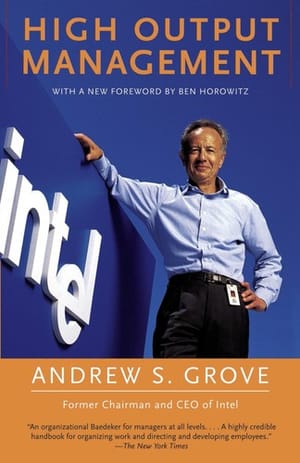
- High Output Management — Andy Grove's foundational framework, the direct predecessor to Hastings's philosophy; understanding Grove makes Hastings's argument clearer
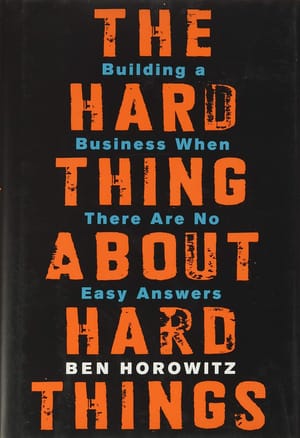
- The Hard Thing About Hard Things — Ben Horowitz on the psychological and interpersonal dimensions of leadership that complement Hastings's systemic approach
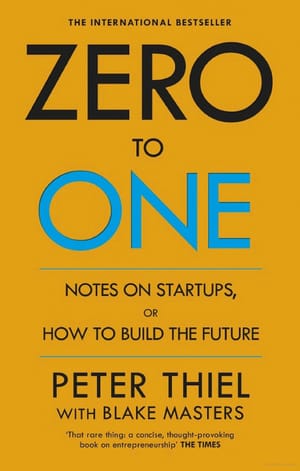
- From 0 to 1 — Peter Thiel on building something genuinely new; shares with Hastings an emphasis on unconventional thinking about what organizations should look like