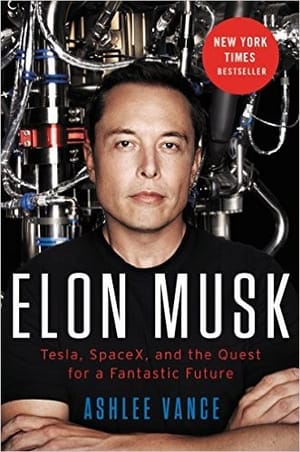
Elon Musk is the most polarizing entrepreneur of the twenty-first century and, by most measures, the most consequential founder still actively running companies. He has built businesses in electric vehicles, private space launch, solar energy, brain-computer interfaces, artificial intelligence, and social media — not sequentially, but simultaneously, often while each of those businesses was facing existential crisis.
For startup founders, Musk is instructive in ways that are difficult to replicate and dangerous to misread. His approach to company-building is not transferable at the level of tactics — most founders cannot put $180 million of their own money into a venture that they publicly acknowledge might fail, or manage four parallel CEO roles. But at the level of principles — how he thinks about problems, how he sets targets, how he relates to risk — there is a great deal worth studying carefully.
The startup books that engage with Musk most directly focus on the PayPal years, because PayPal is where his methods were forged in a context that resembles the kind of company most founders are actually building: a small team, limited runway, a crowded market, and an urgent need to do something competitors cannot easily copy.
Career
Zip2 (1995–1999)
Musk arrived in the United States from Canada (where he had moved from South Africa) in 1995 to pursue a PhD in energy physics at Stanford. He lasted two days before dropping out to start a company. That company was Zip2, a web-based business directory and mapping service — essentially, an early version of what would become Google Maps for local businesses.
Zip2 was not a smooth operation. Musk slept at the office, wrote most of the code himself in the early months, and frequently clashed with the board over his desire to remain in a technical leadership role. The board eventually replaced him as CEO. The outcome, however, was successful: Compaq acquired Zip2 in 1999 for $307 million in cash. Musk's share was approximately $22 million.
X.com and PayPal (1999–2002)
With his Zip2 proceeds, Musk founded X.com, an online financial services company. In 2000, X.com merged with Confinity — a rival payments startup co-founded by Peter Thiel and Max Levchin — and the merged entity became PayPal.
The PayPal years were internally chaotic. Musk was replaced as CEO by Thiel after a contentious board vote while Musk was on his honeymoon. There was genuine strategic disagreement about the technical architecture of the payment system. But the company survived, grew rapidly, and was acquired by eBay in October 2002 for $1.5 billion in stock. Musk's share was approximately $180 million.
This period produced what Thiel would later call the "PayPal Mafia" — the group of founders and executives from the company who went on to found or fund some of the most significant technology companies of the following two decades, including YouTube, LinkedIn, Yelp, Palantir, and others.
SpaceX (2002–present)
Musk founded SpaceX in June 2002 with the explicit goal of making humanity a multi-planetary species. He put $100 million of his own money into it — roughly his entire net worth at the time.
The first three Falcon 1 rocket launches failed. By the fourth launch in 2008, SpaceX had nearly exhausted its funding. Success on the fourth attempt — and a subsequent $1.6 billion NASA contract — saved the company. Since then, SpaceX has become the dominant commercial launch provider in the world, developed the Falcon 9 reusable rocket (which has dramatically reduced the cost of reaching orbit), and launched the Starship rocket system, which aims to carry humans to Mars.
SpaceX has never gone public. Its valuation as of early 2026 is estimated at over $350 billion, making it one of the most valuable private companies in history.
Tesla (2004–present)
Musk joined Tesla in 2004 as chairman of the board and lead investor in the Series A round. He became CEO in 2008, during the financial crisis, when the company was days from bankruptcy. He put his last available cash into it to keep it alive.
Tesla's trajectory from nearly-dead luxury EV startup to the world's most valuable car company is the central case study in what Musk calls "first-principles thinking" applied to manufacturing. Rather than accepting that battery costs were fixed at market rates, the Tesla team decomposed battery packs into their constituent materials, calculated the theoretical minimum cost at commodity prices, and worked backward to a design that approached that minimum. The result was a 40% reduction in cost over industry benchmarks.
Tesla went public in June 2010 and became the most valuable car company in the world by market capitalization in 2020, surpassing Toyota.
Twitter/X (2022–present)
Musk's $44 billion acquisition of Twitter in October 2022 — which he attempted to cancel and was forced to complete through litigation — is perhaps the most studied corporate acquisition of recent years. He immediately laid off approximately 75% of the workforce, reorganized the product roadmap around paid subscriptions, and rebranded the platform as X. The business case remains contested, but the episode is deeply relevant to startup founders studying how leadership style and organizational culture interact at scale.
Elon Musk Net Worth
As of early 2026, Musk's net worth is estimated at approximately $300–400 billion, making him the wealthiest or second-wealthiest person in the world depending on market conditions. The majority of this wealth is in equity stakes in Tesla and SpaceX — companies that are not fully liquid. His Tesla stake is approximately 13%, and his SpaceX stake is approximately 42%.
The arc of his wealth is itself instructive: in 2008, with SpaceX's rockets failing and Tesla near bankruptcy, Musk was borrowing money from friends to pay rent. His wealth is entirely the product of equity stakes in companies he founded or co-led — not diversified financial portfolios or inherited capital.
Ideas and Philosophy
First-principles thinking. This is Musk's most frequently cited intellectual framework. The idea, borrowed from physics and from Aristotle before that, is to reason from fundamental truths rather than by analogy. Most people, when asked why something costs what it costs, accept the existing market price as a given. Musk's approach is to decompose the product into its constituent materials, calculate the cost of those materials at commodity prices, and then ask what stands between the current cost and the theoretical floor. This framework is why Tesla batteries got cheaper, why SpaceX rockets got reusable, and why Boring Company tunnels were redesigned from scratch.
The Algorithm. As documented in Walter Isaacson's biography and in accounts from Tesla and SpaceX employees, Musk has a set of engineering principles he applies to any manufacturing or product problem. The most important: question every requirement; delete as many parts and processes as possible before adding anything; only then optimize; and avoid automation before you have simplified everything that can be simplified. The sequencing matters — many companies automate bad processes rather than eliminating them.
Physics-based reasoning and mission over profit. Musk consistently frames his companies' goals in terms of physical outcomes — tons of CO2 avoided, kilograms to orbit, milliseconds of latency — rather than financial metrics. This is not incidental. It creates a different kind of organizational culture: one where engineers are motivated by impact rather than stock price, and where the relevant question is always "what does physics allow?" rather than "what does the market expect?"
Tolerance for existential risk. The willingness to put his entire Zip2 proceeds into SpaceX, and then his entire SpaceX-era savings into Tesla, is not a strategy most founders can or should replicate. But the underlying cognitive frame — that the worst-case scenario is failure, not death, and that the potential upside justifies the risk — is worth studying. Musk has said explicitly that he expected both SpaceX and Tesla to fail and considered it "worth trying anyway."
Elon Musk in Startup Books
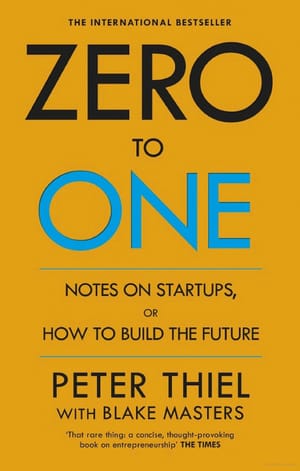
Peter Thiel's From 0 to 1 is the startup book most directly rooted in the PayPal experience, and Musk is a constant presence in that context even when not named explicitly. Thiel's chapter on the "PayPal Mafia" describes how the tight-knit group of founders who built PayPal went on to create a disproportionate share of the most valuable technology companies of the following decade — a phenomenon Thiel attributes not to luck but to the specific intellectual culture of the founding team.
Thiel is careful in the book about the nature of his relationship with Musk. Their disagreement over PayPal's technical direction — Musk wanted to maintain the Windows-based system while Thiel and Levchin wanted to rebuild everything in Unix — was a genuine strategic conflict. Thiel frames this in From 0 to 1 as a lesson about the importance of decisive leadership in moments of strategic disagreement: a company cannot simultaneously pursue two incompatible technical architectures.
What Thiel finds admirable in Musk — and what From 0 to 1 implicitly celebrates — is the willingness to build companies that make a small number of large bets rather than hedging across many small ones. SpaceX's Falcon 9 and Tesla's Model S are both examples of Thiel's concept of going from "0 to 1": creating something genuinely new rather than iterating on existing solutions.
The book's section on secrets — the idea that great companies are built on insights that are true but not yet widely believed — maps almost exactly onto Musk's stated founding thesis for SpaceX (that rockets could be made reusable, which the aerospace industry had converged on believing was impossible) and Tesla (that electric vehicles could be desirable, which most of the automotive industry believed was a niche market).
Frequently Asked Questions
Is Musk's approach applicable to founders who aren't billionaires?
The financial risk-taking is not applicable. But the mental frameworks are. First-principles thinking, the willingness to question inherited assumptions, the practice of setting targets based on physical limits rather than competitive benchmarks — these are available to any founder at any stage. The more useful question is whether a given startup team is reasoning from first principles about their own cost structure, product architecture, and go-to-market approach, or whether they are accepting the market's existing answers as fixed.
What is the most important lesson from Musk's career for early-stage founders?
The most transferable lesson may be the sequencing of his companies. Zip2 taught him how to build software products and manage a technical team. PayPal taught him how to build payments, manage a high-growth consumer product, and navigate investor relations. SpaceX applied those capabilities to a domain with longer feedback loops and higher stakes. Each company was a bet that used what the previous one had taught. Most successful serial founders follow a similar pattern, even if less dramatically.
Related Reading on Startupbooks.com
- From 0 to 1 — Peter Thiel's framework for building category-defining companies, written directly from the PayPal years that Musk and Thiel shared
Career
Current: CEO of Tesla, SpaceX, xAI; Owner of X (formerly Twitter)
- Co-founder and CEO of PayPal (via Zip2 and X.com merger)
- Co-founder of Zip2 (sold to Compaq, 1999)
- Co-founder and Chairman of SolarCity (acquired by Tesla)
Related Companies
Tesla · SpaceX · PayPal
Key Themes
- First-principles thinking
- Audacious goal-setting
- Vertical integration
- Tolerance for existential risk
- Multi-company parallel execution
Famous Quotes
"I think it's possible for ordinary people to choose to be extraordinary."
"When something is important enough, you do it even if the odds are not in your favor."
"First-principles thinking: boil things down to the most fundamental truths and reason up from there."
Further Reading