SpaceX is the most dramatic founder resilience story in modern startup literature. The company's early history — three consecutive Falcon 1 launch failures, near-bankruptcy in 2008, and a fourth launch that worked just in time to save the company — is the kind of narrative that startup books usually present as inspirational fiction. It is, in fact, documented fact, and that documentation is what makes the SpaceX story so valuable as a case study for founders facing genuine existential crises.
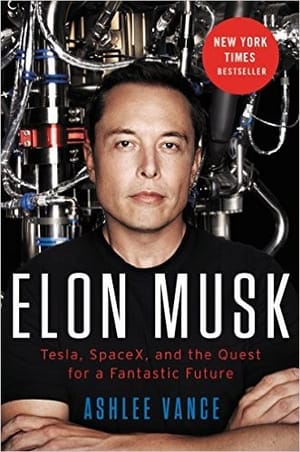
The primary source is Ashlee Vance's Elon Musk: Tesla, SpaceX, and the Quest for a Fantastic Future (2015), which covers SpaceX's founding through the early 2010s in extraordinary detail. Vance had access to Musk and to dozens of SpaceX's early employees, and the result is one of the most granular accounts of early-stage company building available in print — including the specific engineering failures, the specific financing maneuvers, and the specific management decisions that determined whether the company lived or died.
SpaceX also appears in broader discussions of vertical integration, first-principles engineering, mission-driven company culture, and the economics of innovation in capital-intensive industries. It is one of the most frequently cited examples of a company that succeeded by questioning fundamental industry assumptions that established players had treated as fixed constraints.
SpaceX — Space Exploration Technologies Corporation — was founded by Elon Musk in 2002 in El Segundo, California (later moved to Hawthorne, California). Musk's stated goal was explicit and audacious: reduce the cost of access to space by a factor of ten, and eventually establish a self-sustaining human civilization on Mars.
The company was funded entirely by Musk's own capital at founding — approximately $100 million of the approximately $180 million he received from the PayPal acquisition. This was essentially his entire liquid net worth. He later described the decision to invest this amount in SpaceX as knowing, rationally, that the company was likely to fail, but concluding that the importance of the mission justified the attempt regardless of probability.
Musk's first significant action was to recruit a small team of aerospace engineers, many of them from established players like Boeing, TRW, and the national labs. The core early team included Tom Mueller, who became SpaceX's chief propulsion engineer and designed the Merlin engine that would power the Falcon 1 and Falcon 9. Mueller's willingness to join what the aerospace establishment considered a delusional venture was critical: his technical capability gave SpaceX the ability to design and build its own engines rather than purchasing them commercially, which was the key to SpaceX's cost structure.
The first product was the Falcon 1 — a small, two-stage liquid-fueled rocket designed to place small payloads in low Earth orbit at a fraction of the cost of existing launch vehicles. SpaceX's first launch facility was on Omelek Island in the Kwajalein Atoll in the Marshall Islands — remote, primitive, and chosen partly for its existing range safety infrastructure from U.S. military missile testing.
Vance's biography covers the SpaceX story with exceptional detail, and several aspects of the early years receive particularly thorough treatment.
The three Falcon 1 failures. The first three Falcon 1 launches are described in detail that makes the engineering problems tangible and the stakes emotionally real. The first launch, in March 2006, failed 25 seconds after liftoff due to a fuel leak caused by a corrosion issue with a fuel fitting that had been improperly installed. The second, in March 2007, failed due to a fuel sloshing issue that caused the rocket to roll uncontrollably after the first stage separated. The third, in August 2008, was the most painful: the rocket performed nearly perfectly through first stage flight, achieved first stage separation, but a longer-than-expected shutdown of the first stage engine caused it to re-contact the second stage during separation and destroy both stages.
The third failure was particularly devastating because it came with SpaceX nearly out of money. Musk had invested essentially all of his PayPal proceeds. The 2008 financial crisis had made new fundraising nearly impossible. Tesla, which Musk had taken over as CEO in early 2008, was simultaneously in financial crisis. Musk had to decide whether to attempt a fourth Falcon 1 launch, knowing that SpaceX would almost certainly not survive a fourth failure.
The fourth launch and the NASA contract. The fourth Falcon 1 launch, on September 28, 2008, is one of the most dramatic moments in the history of private enterprise. SpaceX had fixed the separation issue that caused the third failure. The launch proceeded nominally. Falcon 1 reached orbit — the first privately developed liquid-fueled rocket to do so. Vance describes the atmosphere in the SpaceX control room at the moment of orbital insertion with the intensity of a scene from a thriller novel, because the stakes were genuinely that high.
Months later, NASA awarded SpaceX a $1.6 billion Commercial Resupply Services contract to deliver cargo to the International Space Station. The contract provided the financial runway SpaceX needed to develop the Falcon 9 — a much larger rocket that would become the company's primary vehicle — and to continue toward its long-term goals.
The NASA contract is a crucial element of the SpaceX story that sometimes gets lost in the narrative of private sector disruption. SpaceX's early survival depended significantly on government contracts — the NASA CRS award in 2008, followed by subsequent contracts for crew transportation. The company's success is partly a story of private sector innovation and partly a story of a strategic relationship with a government customer willing to accept the risk of contracting with an unproven startup for an extremely high-stakes application.
The culture and the mission. Vance's interviews with SpaceX employees reveal a culture that is unusual even by startup standards: extremely demanding, technically intense, unusually focused on the underlying mission (making humanity multiplanetary), and capable of sustaining extraordinary levels of effort through genuinely difficult periods.
The mission orientation is not merely rhetorical in Vance's account. Employees who stayed through the failed launches and the near-bankruptcy described their commitment in terms of genuinely believing that SpaceX's success was important for the long-term survival of civilization — that the ability to establish a self-sustaining presence beyond Earth was sufficiently important to justify the personal cost of working there. Musk has said the same in public many times, and the consistency between his public statements and the private accounts of employees suggests that the mission orientation is real rather than performative.
SpaceX's history offers several lessons for founders attempting genuinely audacious goals in capital-intensive industries.
The willingness to accept near-certain failure can be rational if the mission is important enough. Musk's investment of essentially his entire net worth in SpaceX, knowing rationally that it would probably fail, is one of the more studied examples of founder risk-taking in startup literature. His framing — that the importance of the mission justified the attempt regardless of probability — is an unusual framework for thinking about entrepreneurial risk, and one that most founders don't apply because their goals don't carry the same kind of civilizational stakes. But the underlying question — is this important enough to attempt even if it's likely to fail? — is a genuinely useful question for founders evaluating how much to commit to an uncertain venture.
Vertical integration in capital-intensive industries can be a profound competitive advantage. SpaceX's decision to design and manufacture as many rocket components as possible internally — including the Merlin engine, which established rocket companies purchased from third-party suppliers — was the foundation of its cost advantage. When SpaceX can build an engine for a fraction of what an established supplier would charge, and when that engine is engineered specifically for SpaceX's vehicle rather than adapted from an existing design, the cost and performance advantages compound. This first-principles approach to vertical integration is directly applicable to any founder building in a capital-intensive industry where established supply chains drive cost structures that innovative entrants can undercut.
Mission-driven culture sustains organizations through crises that destroy others. The SpaceX employees who stayed through three failed launches, near-bankruptcy, and the 2008 financial crisis did so partly because of Musk's personal force of will and partly because they genuinely believed in what SpaceX was trying to do. Building a company with a mission that employees believe is genuinely important — not marketing language, but a real objective that intelligent people find worth working toward — creates organizational resilience that companies built purely around financial incentives cannot replicate.
Government relationships are not incompatible with innovation. SpaceX's path to viability ran directly through NASA contracts. The company's most important early customer was the U.S. government. Founders in highly capital-intensive industries should be clear-eyed about the role that government customers, government loans, and government partnerships can play in making genuinely ambitious ventures viable — and should not mistake the anti-government rhetoric common in startup culture for a strategic prescription applicable to all domains.