Tesla appears in startup literature in two distinct contexts. The first is as a case study in disruptive innovation — a new entrant that challenged an established, capital-intensive industry (automotive manufacturing) from outside and, against nearly universal expert skepticism, succeeded in forcing that industry to transform. The second is as a case study in founder resilience — the story of how Tesla survived multiple near-death experiences, founder conflicts, a devastating financial crisis, and a production process that nearly destroyed the company, to eventually become one of the most valuable automakers in history.
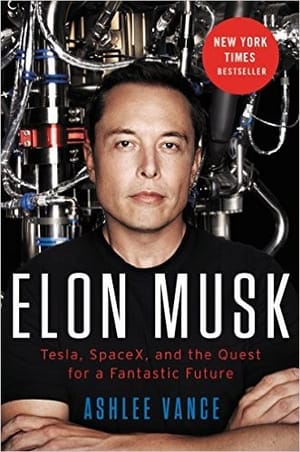
The primary text is Ashlee Vance's Elon Musk: Tesla, SpaceX, and the Quest for a Fantastic Future (2015), which covers Tesla's founding through the early years of Musk's tenure as CEO. But Tesla also appears in Clayton Christensen's work on disruptive innovation, in discussions of first-principles engineering, and in broader analyses of how technology-native companies compete in traditional industries.
The Tesla story is particularly valuable for founders because it illustrates the specific costs and strategies of attacking an industry with enormous existing capital investment, regulatory structure, and supplier networks — an industry where incumbents have structural advantages that make disruptive entry extremely difficult. Tesla's path through those structural barriers is one of the more detailed available accounts of how a startup actually navigates the gap between an innovative product and industrial-scale production.
Tesla was founded in July 2003 by Martin Eberhard and Marc Tarpenning, two engineers who had met at a previous startup and who shared an interest in electric vehicles. The immediate inspiration was the AC Propulsion tzero — a prototype electric sports car that demonstrated that electric vehicles could be fast, fun, and genuinely desirable rather than slow, ugly compromises.
Eberhard and Tarpenning's insight was that the tzero's battery technology — specifically, the use of thousands of small lithium-ion cells (the same type used in laptop computers) assembled into a large pack — could be commercially scaled into a production vehicle. They founded Tesla with the explicit intention of building a premium electric sports car as the first product, establishing the brand, and then using the revenue and technology base to build progressively more affordable vehicles for a mass market.
The company attracted Elon Musk as chairman and lead investor in its Series A round in early 2004. Musk contributed $6.5 million of the $7.5 million raised and joined the board. The relationship between Musk and the founding team was productive in the early years but became increasingly tense as the Roadster program — Tesla's first car — repeatedly missed milestones and blew past budget.
The Roadster was based on a modified Lotus Elise chassis with a Tesla-designed electric drivetrain. What seemed straightforward in principle turned out to be extraordinarily difficult in practice. The modifications required to accommodate the battery pack and electric motor were far more extensive than originally estimated. The battery management systems required to safely manage the thousands of cells in the pack were novel engineering problems without established solutions. The transmission, a two-speed design that would allow both performance at launch and efficiency at highway speeds, was a persistent source of problems that ultimately led Tesla to use a single-speed transmission instead.
By 2007, the Roadster was severely over budget and behind schedule. Eberhard's production cost estimates had been consistently optimistic, and Musk, increasingly involved in the day-to-day management of the company, forced Eberhard out of the CEO role in August 2007. After a brief period with interim CEOs, Musk took the CEO role himself in October 2008, in the middle of the financial crisis.
Ashlee Vance's biography covers Tesla from its founding through the mid-2010s, and several aspects of the Tesla story receive particularly detailed treatment.
The founding and the Musk-Eberhard conflict. Vance presents the Eberhard-Musk conflict as genuinely complicated — a founder who built something real but whose production optimism created serious problems, and an investor-turned-CEO who understood manufacturing better but who was also personally difficult in ways that complicated the transition. The legal dispute over who should be recognized as Tesla's founders — Eberhard sued for defamation after Musk began questioning his contributions — was eventually settled out of court, but the underlying tension between the original vision and Musk's takeover of the company is documented in detail.
The specific claim at issue was important: Musk was listed as a co-founder by Tesla in public communications, which Eberhard disputed. Vance's account is that Musk was not a technical co-founder in the sense of having founded the company or designed the product, but that his capital, his involvement in key engineering and design decisions, and his eventual assumption of full operational control gave him a legitimate claim to the founder designation — however uncomfortable that claim made the actual founders.
The 2008 crisis. The section of the book covering 2008 is the most gripping part of the Tesla narrative. Tesla's Roadster production was in crisis — the car was nearly two years behind schedule and hundreds of millions of dollars over budget. The 2008 financial crisis had destroyed the investment climate, making additional fundraising nearly impossible. Musk had simultaneously invested nearly his entire liquid net worth in SpaceX, which was in its own near-death crisis after three consecutive Falcon 1 launch failures.
Vance documents Musk's decision to split his remaining personal capital between SpaceX's fourth launch attempt and Tesla's survival funding — a decision that underfunded both companies but prevented either from dying immediately. The NASA contract that SpaceX won in late 2008 after the successful fourth launch provided the cash that saved SpaceX. Tesla was saved by a combination of Musk's personal loans to the company, a $465 million DOE loan guaranteed in early 2009, and a small private investment from Daimler.
Production hell and the long road to scale. Vance covers the Roadster's eventual production and the subsequent development of the Model S, but the book ends before the Model 3 production crisis of 2017-2018, which Tesla employees later described as the most intensive version of the production hell that has characterized every major Tesla vehicle launch. That later period, documented in other accounts and in Musk's own statements, is in many ways a repetition of the same pattern Vance documents: overambitious production timelines, manufacturing systems that don't work as designed, near-failure of the company's financial position, and eventual production achievement through sustained crisis-mode effort.
Several lessons from Tesla's history are particularly relevant for founders attacking established industries with capital-intensive physical products.
The gap between designing something and manufacturing it at scale is enormous. Tesla's engineering breakthroughs in battery management, electric drivetrains, and software-defined vehicles were genuine and significant. But the manufacturing gap — the distance between "we can build this in a prototype" and "we can build 50,000 of these per year at consistent quality and cost" — nearly killed the company multiple times. Founders attacking physical product markets need to take this gap seriously from the beginning, not discover it when they're already committed.
First-principles thinking enables attacks on incumbents with structural advantages. Tesla's approach to battery technology — questioning the assumption that automotive batteries had to be large-format cells designed specifically for vehicles, and instead asking what the best available battery technology was — is the canonical example of first-principles engineering in startup literature. The insight that laptop battery cells were safer, more energy-dense, and more commercially available than purpose-built automotive cells was not obvious, but it was correct, and it gave Tesla a battery cost and performance advantage that conventional automakers couldn't easily replicate.
Surviving a near-death experience changes a company permanently. Tesla's survival of the 2008 crisis — and the subsequent production crises around the Roadster and Model S — created an organizational culture that is unusually resilient to crisis. Employees who stayed through those periods internalized the lesson that the company could survive things that looked fatal. This organizational resilience is one of the underappreciated assets that Tesla built during its difficult early years.