Who Is Clayton Christensen?
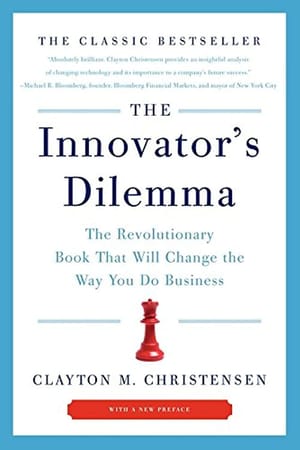
Clayton M. Christensen (1952–2020) was a Harvard Business School professor and the author of The Innovator's Dilemma (1997), which many consider the most important business book of the last three decades. He coined the theory of disruptive innovation — a rigorous framework for explaining why successful, well-managed companies are systematically vulnerable to attack from smaller, cheaper, initially inferior competitors. He was ranked the world's most influential management thinker by Thinkers50 in both 2011 and 2013, and his ideas have shaped how investors, executives, and founders think about market dynamics more than almost any other scholar in the field.
Steve Jobs listed The Innovator's Dilemma as one of the books that influenced him most. Andy Grove, Intel's legendary CEO, credited Christensen with helping him understand the strategic threat Intel faced from lower-end processors. Jeff Bezos reportedly gave the book to every senior Amazon executive. In the world of business strategy, few books have generated a comparable footprint.
Life and Career
Early Life and Education
Christensen was born in 1952 in Salt Lake City, Utah. He was a devout member of The Church of Jesus Christ of Latter-day Saints, which he described as a central part of his identity and the source of his framework for thinking about personal integrity and purpose. He served a mission in South Korea in his early twenties, an experience that gave him fluency in Korean and a lifelong connection to that country.
He studied economics at Brigham Young University, then won a Rhodes Scholarship to Oxford, where he completed an MPhil in applied econometrics. He went on to Harvard Business School, where he earned both his MBA (graduating as a Baker Scholar) and his DBA. His doctoral dissertation laid the groundwork for what would become the disruptive innovation theory.
Harvard Business School (1992–2020)
Christensen joined the Harvard Business School faculty in 1992 and spent the rest of his career there, eventually holding the Robert and Jane Cizik Professorship in Business Administration. He taught Building and Sustaining a Successful Enterprise (BSSE), one of HBS's most popular MBA electives, and mentored hundreds of students who went on to apply his frameworks at companies and in policy roles around the world.
He co-founded several ventures during his time at HBS: Innosight (a strategy consulting firm applying disruption theory to corporate transformation), Rose Park Advisors (an investment fund built on disruptive innovation principles), and CPS Technologies (an advanced materials company). He demonstrated through practice that his frameworks were not only academic but applicable.
He suffered a series of serious health challenges in his later years, including a heart attack (2010), cancer (2010), and a stroke (2010) that temporarily affected his speech. He continued to teach, write, and speak with remarkable energy until close to his death in January 2020.
The Disruptive Innovation Framework
The central insight of The Innovator's Dilemma is deceptively simple: well-managed companies fail not despite doing everything right, but precisely because they do everything right — as defined by their current customers and their current business model.
Sustaining vs. Disruptive Innovation
Sustaining innovations make existing products better along dimensions that mainstream customers already value. Faster hard drives. More fuel-efficient engines. Better cameras on smartphones. Established companies are excellent at sustaining innovations because they have the customer relationships, the engineering capacity, and the financial incentives to invest in improvements that existing customers will pay more for.
Disruptive innovations are initially worse than existing products on the dimensions mainstream customers care about. They are cheaper, simpler, more convenient, or more accessible — and they serve customers who are either overserved by existing products (and don't need all the features) or not yet served at all (new-market disruption).
The canonical example in the book is the disk drive industry. Each generation of smaller, less-powerful disk drives (8-inch, 5.25-inch, 3.5-inch) was initially inferior to the incumbents' products. Mainstream customers didn't want them. But they were cheap enough and small enough to serve new markets — first minicomputers, then PCs. By the time the new drives improved enough to serve the mainstream, the companies that had been making those disks had developed entirely new capabilities and cost structures, and the incumbents couldn't compete.
Why Incumbents Rationally Ignore Disruption
This is the dilemma: when a disruptive technology first appears, it is rational for an incumbent to ignore it. Its current customers don't want it. It has lower margins. It would cannibalize existing revenue. Every rational resource-allocation process in a well-managed company will systematically under-invest in disruptive innovations.
Christensen shows that this is not stupidity or negligence — it is the normal, predictable result of listening to your best customers and protecting your highest-margin products. The managers who tried to invest in disruptive technologies within incumbents were usually overruled by processes that directed resources toward sustaining innovations, because that's what the numbers supported.
The Upmarket Migration Trap
A related dynamic: disruptive entrants start at the low end of a market (low margins, less demanding customers). Incumbents retreat upmarket, focusing on the most profitable, most demanding customers. This seems rational, but it leaves the low end undefended. The disruptors improve — they always do — and eventually move upmarket themselves. By then, the incumbent has retreated so far that there's nowhere left to go.
The pattern repeated in steel (minimills vs. integrated steel makers), retail (Walmart vs. department stores), digital photography (smartphones vs. dedicated cameras), and countless other industries.
Other Books
The Innovator's Solution (2003)
The follow-up to The Innovator's Dilemma, co-authored with Michael Raynor, shifts from diagnosis to prescription: instead of explaining why companies fail, it describes how to create the disruptions that cause incumbents to fail. It introduces the Jobs to Be Done concept in early form, arguing that customers "hire" products to do specific jobs and that understanding those jobs is more useful than understanding customer demographics or attributes.
How Will You Measure Your Life? (2012)
Originally a speech to HBS graduates, How Will You Measure Your Life? applies the same frameworks from The Innovator's Dilemma to personal decisions: career, relationships, family, integrity. The theory of motivation (drawing on Frederick Herzberg) appears in a chapter arguing that money and prestige are hygiene factors that prevent dissatisfaction but don't create genuine engagement — a lesson Christensen saw validated by watching highly credentialed people build successful careers while their personal lives collapsed.
The book's most quoted line — "It's easier to hold your principles 100% of the time than it is to hold them 98% of the time" — reflects his belief that integrity is not a matter of willpower in each individual moment, but of making a prior commitment that removes the decision from each new temptation.
Competing Against Luck (2016)
Christensen's full articulation of Jobs to Be Done theory, co-authored with Taddy Hall, Karen Dillon, and David Duncan. The framework argues that the unit of analysis for innovation should not be the product or the customer, but the "job" the customer is trying to accomplish. When you understand the job, you can design a product that gets hired for it — and build a category, not just a product.
His Legacy
Christensen's legacy operates at two levels. At the conceptual level, "disruption" has become one of the most frequently used words in business — often misused, as Jill Lepore noted in her 2014 New Yorker critique, to describe any competitive pressure at all rather than the specific pattern Christensen identified. The misuse is partly a sign of the framework's success: it spread so widely that the original precision was diluted.
At the practical level, his influence is embedded in how venture capitalists evaluate markets, how boards think about competitive risk, and how founders identify the right market entry point. The question "who are the overserved customers in this market?" is a Christensen question, even when it's asked without attribution.
He was also one of the rare HBS professors whose work engaged equally with large corporations, startup founders, investors, healthcare policymakers, and educators. The breadth of his application was part of what made him exceptional.
Memorable Quotes
"The reason why it is so difficult for existing firms to capitalize on disruptive innovations is that their processes and their business model that make them good at the existing business actually make them bad at competing for the disruption." — The core paradox, stated plainly.
"It's easier to hold your principles 100% of the time than it is to hold them 98% of the time." — On integrity as a prior commitment rather than a case-by-case decision.
"The most important question to ask isn't what the company wants — it's what job the customer is trying to get done." — The seed of Jobs to Be Done theory.
Who Should Read His Work
The Innovator's Dilemma is essential for:
- Startup founders identifying where to enter a market — the overserved segments that incumbents are fleeing are often the best starting point
- Corporate strategists who need a framework for understanding why their organization keeps losing to smaller, cheaper, initially inferior competitors
- Investors evaluating whether a company's business model creates a durable competitive position or is vulnerable to disruption from below
- Anyone in healthcare, education, or financial services — the three industries Christensen applied his frameworks to most extensively, arguing all three are ripe for disruption
FAQs
Is "disruption" the same thing as innovation?
No — and this is one of the most common misuses of Christensen's framework. Not every new product or business model is disruptive in his sense. True disruption follows a specific pattern: a new entrant starts below the mainstream market, improves along a different dimension than incumbents, and eventually moves upmarket. Netflix disrupting Blockbuster is a classic case. An airline adding a new route is not disruption — it's sustaining innovation.
Was Christensen wrong about anything?
Some critics, including historian Jill Lepore, argued that the historical examples in The Innovator's Dilemma were selectively chosen and that the framework is harder to apply predictively than it appears in retrospect. Christensen acknowledged that identifying disruption in advance is difficult — the framework is most useful for designing strategy, not for predicting which specific companies will win.
How does Jobs to Be Done relate to the disruption framework?
Jobs to Be Done is complementary rather than derivative. Disruption theory explains the dynamics of market competition over time. Jobs to Be Done is a framework for understanding what customers actually want, at the level of the specific outcome they're trying to achieve. Together, they give founders both a market-entry strategy (find overserved or unserved customers) and a product strategy (understand the specific job they're trying to get done).
How should founders apply The Innovator's Dilemma?
The most direct application is market selection: rather than trying to displace incumbents directly in the mainstream market (where they have every advantage), look for either the low end of the market (where customers are overserved and would be happy with a cheaper, simpler product) or for non-consumption (customers who aren't currently served at all because existing products are too expensive or complicated). Both are historically the entry points for successful disruption.
Professional Background
Current role: Deceased (January 23, 2020)
Previous roles:
- Robert and Jane Cizik Professor of Business Administration, Harvard Business School (1992–2020)
- Co-founder and Chairman, Innosight (strategy consulting firm)
- Co-founder, Rose Park Advisors (investment fund)
- Co-founder, CPS Technologies (advanced materials company)
- White House Fellow
- Consultant, Boston Consulting Group
Undergraduate: BA, Economics, Brigham Young University (1975)
Graduate: MPhil, Applied Econometrics, Oxford University (Rhodes Scholar); MBA, Harvard Business School (Baker Scholar); DBA, Harvard Business School (1992)
Themes
- Disruptive innovation
- Jobs to be Done
- Sustaining vs. disruptive technology
- Resource allocation in corporations
- Healthcare reform
- Personal purpose and life strategy
Influences
- Joseph Schumpeter
- Michael Porter
- W. Edwards Deming
Popular Works
- The Innovator's Dilemma: When New Technologies Cause Great Firms to Fail (1997)
- The Innovator's Solution: Creating and Sustaining Successful Growth (2003)
- How Will You Measure Your Life? (2012)
- Competing Against Luck: The Story of Innovation and Customer Choice (2016)
- The Innovator's Prescription: A Disruptive Solution for Health Care (2009)
Awards
- Ranked #1 on the Thinkers50 list of most influential business thinkers (2011, 2013)
- McKinsey Award for best Harvard Business Review article (multiple times)
- Fortune: one of the greatest management thinkers of all time
Contributions
Famous Quotes
"The reason why it is so difficult for existing firms to capitalize on disruptive innovations is that their processes and their business model that make them good at the existing business actually make them bad at competing for the disruption."
"It's easier to hold your principles 100% of the time than it is to hold them 98% of the time."
"The most important question to ask isn't what the company wants — it's what job the customer is trying to get done."
Related Founders
Steve Jobs · Andy Grove
Related Companies
Apple · Intel · Netflix
Links