Introduction
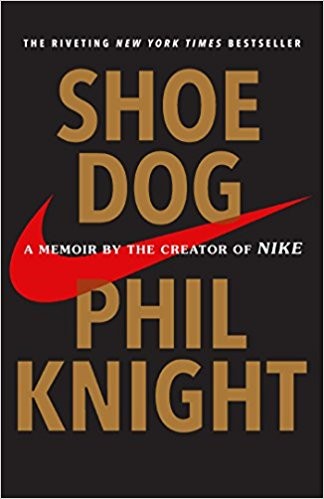
Shoe Dog: A Memoir by the Creator of Nike was published in April 2016 when Phil Knight was seventy-eight years old and had been out of the day-to-day management of Nike for more than a decade. He did not need to write it. He was one of the wealthiest people in the world, his legacy was secure, and he had nothing commercially to gain from telling a story he had spent fifty years not telling. The book he wrote is the more remarkable for all of that.
Shoe Dog is honest in a way that most business memoirs are not. Knight describes near-death experiences — financial crises, banking disputes, manufacturing failures, legal threats — that most founders would never admit in public. He describes his own failures of leadership, his failures as a husband and father, his moments of doubt. He is unflattering about himself and fair to his adversaries. He credits his partners, employees, and even his shoe suppliers generously. The result is a book that reads less like a success story than like an account of what it actually feels like to build something: terrifying, thrilling, exhausting, and impossible to stop.
For founders, the book is valuable for two reasons. First, it is one of the most vivid available accounts of what the early years of building a company actually look like from the inside — not the polished retrospective version, but the lived version, with the uncertainty and the fear intact. Second, it is an unusually honest account of cash flow as an existential problem: Nike was functionally insolvent for most of its first decade, one bad season or banking decision away from failure, and Knight's management of that permanent near-crisis is a masterclass in founder psychology under pressure.
Who Should Read Shoe Dog?
Every founder who is struggling. Not because Shoe Dog will give you a framework or a methodology — it will not. But because Knight's account of building Nike against impossible odds is one of the most effective antidotes to the feeling that your struggles are unusual or that successful founders did not face what you are facing. They did. The difference is that most of them do not talk about it honestly, and Knight does.
Founders dealing with cash flow problems. The Nike story is, at its core, a cash flow story. Knight grew the company faster than he could finance it for a decade. The specific mechanisms he used — credit from suppliers, factoring, relationships with his bank — and the moments when those mechanisms failed are described in detail that is directly applicable.
Anyone interested in the psychology of founder conviction. Knight never knew Nike would work. He said so, in his memoir and in interviews. He doubted constantly. But he could not imagine doing anything else, and that combination — radical doubt about whether it would work, absolute commitment to doing it anyway — is the psychological signature of the founders who build things that matter. The book is the best account of that psychology I have encountered.
Readers who enjoyed The Hard Thing About Hard Things by Ben Horowitz. The two books are complementary: Horowitz is more analytical, more structured, more prescriptive. Knight is more impressionistic, more emotional, more literary. Both are honest in ways that most business books are not.
The Crazy Idea
Knight's "Crazy Idea" — the thesis he developed as a Stanford MBA student in 1962 and spent twenty-five years pursuing — was simple in concept and complicated in execution: Japanese running shoes, made with the same manufacturing quality as Japanese cameras and electronics, could beat German-made Adidas in the American market if distributed and marketed correctly.
This was not an obvious insight in 1962. Adidas dominated the American athletic shoe market. The idea that Japanese manufacturers — associated at the time with cheap imitation goods rather than quality products — could produce shoes that would beat Adidas was considered implausible. Knight had visited Japan while traveling after his Stanford MBA, had walked into the Onitsuka Tiger factory in Kobe, and had seen manufacturing quality that convinced him otherwise. He arranged a meeting, presented himself as a representative of Blue Ribbon Sports (a company that did not yet exist), shook hands on an agreement to distribute Onitsuka Tiger shoes in the Western United States, and flew home to Portland to figure out how to make it happen.
The thesis turned out to be correct. The Japanese manufacturing quality was real. The market opportunity was real. The specific execution challenge — building a distribution and marketing operation capable of challenging Adidas — was far harder, more expensive, and more precarious than Knight's original thesis had suggested.
The Cash Flow Crisis — Repeated
The central financial reality of Shoe Dog is that Nike grew faster than Knight could finance it, every year, for most of its first decade. This is not an unusual startup problem — it is endemic to distribution businesses with low margins and high inventory requirements — but the Nike version of it was sustained and severe enough to constitute a genuine existential threat multiple times.
The mechanics were straightforward. Blue Ribbon Sports imported shoes from Japan, paid for them in advance, sold them at athletic meets and through a small number of retail accounts, and used the revenue to order more shoes. The problem was the sequencing: orders had to be placed months in advance, payment was due before the shoes arrived, and revenue came in weeks or months after that. As long as Knight was growing — and he was always growing, because growth was the only way to get to the margins that would eventually justify the business — more capital was permanently required than the company had on hand.
Knight's banker relationship with his original bank, First National Bank of Oregon, was central to the story. Bank of Oregon extended credit that allowed Nike to survive; the bank's officers at various points threatened to call the loans, which would have destroyed the company. Knight describes these conversations in detail, including the psychological toll of building a company whose survival depended, year after year, on the willingness of a bank officer to extend a credit line that was almost always technically over its limit.
The most acute cash crisis came in 1975, when Knight's Japanese supplier, Nissho Iwai, discovered that he had been borrowing from other lenders without their knowledge, technically violating his loan covenants. Nissho threatened to call his loans. Knight had less than a week to find alternative financing before the company would be unable to meet its obligations. He found it — barely — but the experience came close to ending Nike before it became Nike.
The Team: The Buttfaces
One of the most memorable elements of Shoe Dog is Knight's account of the early Nike team — the group of misfits, athletes, and true believers who built the company alongside him in the 1960s and 1970s. Knight called his management team the "Buttfaces" — a name that stuck from an early retreat where someone asked what they should call themselves and Knight, uncharacteristically impulsive, blurted it out.
The team included Bill Bowerman, Knight's coach at the University of Oregon, who became his business partner and chief product innovator; Jeff Johnson, the first full-time employee, who served as salesman, marketer, warehouse manager, and cultural foundation; Bob Woodell, who ran operations from a wheelchair after a climbing accident; and Penny Parks, whose behind-the-scenes operational contributions Knight acknowledges with genuine regret that he did not credit sufficiently at the time.
What united them, in Knight's account, was not conventional qualifications or ambition but a shared belief in the mission — in the idea that running and sport mattered, that better shoes could make athletes better, and that the company they were building was worth the sacrifice. They were underpaid. They were often unsure whether the company would survive. They worked impossible hours on tasks that went well beyond any reasonable job description. And they stayed, because they believed.
This is the lesson Knight draws from the team: that the early hires are not just employees but co-founders in everything but legal designation, and that the quality of their commitment to the mission matters more than their formal qualifications. Johnson, who was technically a shoe salesman, was also the person who named the company Nike, suggested the Swoosh as the logo's official name, and built the cultural identity that made Nike mean something.
Bill Bowerman and Product Innovation
Bill Bowerman appears throughout Shoe Dog as the other half of the company's founding thesis. Where Knight provided the business strategy — the distribution deal, the financial management, the marketing instinct — Bowerman provided the product innovation.
Bowerman's most famous innovation is the waffle sole, developed in 1971 when he poured urethane into his wife's waffle iron to create a shoe sole with a new tread pattern. The waffle sole was lighter than conventional soles and provided better traction. It became the sole of the first Nike shoe — the Waffle Trainer — and established Nike's identity as a company that innovated in product rather than just in marketing.
But Bowerman's importance went beyond any single innovation. He was the company's ongoing connection to what runners actually needed — what the shoes felt like to run in, what the failure modes were, what the next generation of performance shoes should do differently. He tested every shoe design himself, ran in them, dissected them, rebuilt them. His process was empirical in the way that the best product development is: he built things, tested them against reality, and modified them based on what he learned.
The Bowerman story is a useful counterpoint to the myth that great brands are built primarily by marketing. Nike's brand was built on genuine product quality and product innovation, made visible through the athletes who wore the shoes and won in them. The Swoosh and "Just Do It" are famous, but they are famous in part because the product behind them was real.
Near-Death Experiences and Conviction
Shoe Dog documents at least three moments when Nike came within days of permanent collapse:
The 1975 credit crisis, described above, when Nissho Iwai threatened to call Knight's loans after discovering he had borrowed from multiple lenders without disclosure.
The US Customs investigation in 1977, when the federal government determined that Nike owed $25 million in unpaid duties on Japanese shoe imports, a bill that would have bankrupted the company. The customs dispute — which centered on how import duties should be calculated for shoes made under a preferential pricing arrangement between Nike and its Japanese manufacturers — lasted several years, involved extended legal and political maneuvering, and was ultimately settled for approximately $9 million.
The 1972 Munich Olympic Games crisis, when Nike arrived at its first major athletic stage without a full line of products and with most of its shoe orders unfulfilled due to manufacturing problems. The company survived and even gained attention at Munich, but the experience illustrated the permanent gap between what Nike needed to deliver and what it was able to deliver during its first decade.
Knight's account of his psychology during these crises is the most honest part of the book. He was afraid. He doubted. He contemplated surrendering on multiple occasions. And then he kept going, not because he was certain it would work but because the alternative — abandoning the mission — was unacceptable to him. This is the center of the book's argument about founder psychology: conviction is not the absence of doubt but the refusal to let doubt determine the outcome.
Famous Quotes
"Almost every night I'd look in the mirror and say, 'This is insane, this will never work.' But then I'd wake up and do it again."
"Winning means being unafraid to lose."
"Don't tell people how to do things, tell them what to do and let them surprise you with their results."
"Life is growth. You grow or you die."
"The cowards never started and the weak died along the way. That leaves us."
"Business is no more fun than a war and no less."
What the Book Gets Right (and Where It Falls Short)
What it gets right:
Shoe Dog is the most honest major founder memoir. The cash flow crises, the near-collapses, the personal failures — Knight does not filter them. The result is a book that is genuinely informative about what early-stage company building looks like, rather than a retrospective narrative constructed to make the founder look prescient and the company's success seem inevitable.
The account of the early team is generous and specific. Knight credits his co-founders and early employees with remarkable precision, including people who did not become famous alongside him. This is unusual in founder memoirs and makes the book more useful as a study of how early-stage teams actually work.
Where it falls short:
The book ends at the 1980 IPO, which means it covers only the first sixteen years of what is now a sixty-year history. The decisions and challenges that built Nike into its current form — the Air Jordan signing, the international expansion, the manufacturing ethics controversies of the 1990s — are not addressed.
Knight is more revealing about his business experiences than about his personal ones, despite acknowledging significant failures as a husband and father. The personal sections of the book feel less fully examined than the business sections.
The book is a memoir, not a how-to guide, and some readers who come to it looking for actionable frameworks are disappointed by how impressionistic and narrative it is. This is a feature, not a bug — the book's value is in its honesty about experience, not in its prescriptions — but it is worth knowing in advance.
How to Apply It
Take the cash flow problem seriously before it becomes a crisis. Knight describes, in detail, how he managed the chronic gap between what the company owed and what it had on hand. His primary tool was deep supplier relationships — particularly with Nissho Iwai, the Japanese trading company that eventually became a key investor — and proactive communication with his banker. Neither tool is exotic. Both require the psychological discipline to address financial problems honestly rather than hoping they will resolve themselves.
Hire for mission alignment over qualifications. Jeff Johnson was not the most qualified salesman Knight could have hired. He was the most aligned: he cared about running, he cared about the company, and he was willing to do whatever was necessary because he believed in what they were building. For early-stage hiring decisions, the question "Does this person believe in what we are doing?" is at least as important as "Does this person have the right credentials?"
Protect product quality. Knight credits Bowerman's product obsession with establishing Nike's credibility before the brand existed. The shoes had to be genuinely better, not just better marketed. For founders in competitive markets, the discipline of product quality — maintaining it under cost and time pressure — is one of the hardest and most important ongoing decisions.
Frequently Asked Questions
Is Shoe Dog a business book or a memoir?
Both, but it reads more like a memoir. Knight is more interested in capturing the experience of building Nike than in extracting lessons from it. The business lessons are present and significant, but they emerge from the narrative rather than being stated explicitly.
How does Shoe Dog compare to The Hard Thing About Hard Things?
Both books are honest about the difficulty of building companies, but they are honest in different registers. Horowitz is analytical and prescriptive — he describes what was hard and tells you what to do about it. Knight is impressionistic and narrative — he describes what was hard and lets you draw your own conclusions. Both are valuable; they complement each other well.
Why does the book end at the 1980 IPO?
Knight has said in interviews that the story of Nike after the IPO — when the company had genuine financial stability and a national brand — is a different kind of story from the one he wanted to tell. The scrappy, cash-starved, near-death version of the company was the experience that shaped him, and that is the experience the book is about.
Related Books on Entrepreneurship and Founder Psychology
- The Hard Thing About Hard Things — Ben Horowitz's account of the psychological and organizational challenges of building a company — the analytical complement to Knight's more impressionistic memoir
- From 0 to 1 — Peter Thiel on what makes a company genuinely valuable and defensible — the strategic framework that Knight applied intuitively
- The Founder's Dilemmas — Noam Wasserman on the structural decisions founders make about co-founders, equity, and roles — questions that Nike's founding story illustrates from the inside