Phillip Hampson Knight was born in 1938 in Portland, Oregon, the son of a newspaper publisher. He ran track at the University of Oregon under coach Bill Bowerman, then earned an MBA from Stanford Graduate School of Business in 1962. On a trip around the world after Stanford, he visited Japan, walked into the Onitsuka Tiger shoe factory, and came away convinced that Japanese athletic shoes could displace Adidas in the American market. That conviction became Blue Ribbon Sports, which became Nike.
Knight is one of the most financially successful founders in American business history. Nike's market capitalization has exceeded $150 billion, and Knight's personal net worth has been estimated at approximately $40 billion, making him one of the wealthiest people in the world. He stepped down as CEO in 2004, served as chairman until 2016, and is now chairman emeritus.
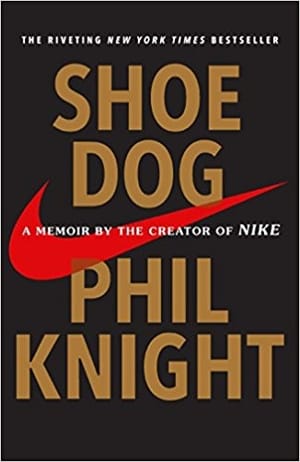
For business purposes, he is most significant for two contributions: building the most valuable sports brand in the world from a standing start with no capital and no industry connections, and — fifty years later — writing Shoe Dog, a memoir that describes how he did it with a degree of honesty that is uncommon in business literature and valuable precisely because of its rarity.
Career
Stanford MBA and the Crazy Idea (1960–1964)
Knight was a middling student at Stanford — capable but not distinguished — but the paper he wrote in a marketing seminar in 1962 became the thesis of his career. The assignment was to develop a business concept; Knight wrote about the opportunity to import Japanese running shoes to America and undercut Adidas on price while matching or exceeding their quality. His professor gave him a B, or something like it. Knight thought the idea was good enough to pursue.
After Stanford, Knight traveled around the world — Japan, Hong Kong, the Philippines, India — and made a stop in Kobe to visit Onitsuka Tiger, the Japanese athletic shoe company whose products he had admired. He presented himself, without invitation, as a representative of an American distribution company called Blue Ribbon Sports. The company did not yet exist, but the Onitsuka executives did not know that. They showed him the factory. He was impressed by the manufacturing quality. He arranged to become their American distributor and received samples of the Tiger shoe.
He returned to Portland and took an accounting job at Coopers & Lybrand to pay his bills. In his spare time and on weekends, he sold Tiger shoes out of the trunk of his car at track meets throughout the Pacific Northwest. The first year, he sold $8,000 worth of shoes and sent $500 to his father to repay the loan.
Blue Ribbon Sports (1964–1971)
Blue Ribbon Sports was formally founded in January 1964 with a $500 investment from Knight's father. Knight recruited Jeff Johnson — a runner and former track star whom he had met at a meet — as the company's first full-time employee. Johnson ran the East Coast distribution operation from his car and apartment, writing long, detailed letters to Knight about customers, products, and the state of the running scene.
The early years were characterized by two parallel challenges: the permanent cash flow problem (the company always owed more than it had) and the relationship with Onitsuka Tiger, which became increasingly complicated as Blue Ribbon Sports grew. Onitsuka was simultaneously Knight's supplier and his would-be acquirer — the Japanese company periodically offered to buy Blue Ribbon Sports, and periodically threatened to terminate the distribution agreement if Knight did not sell. Knight refused, and the relationship deteriorated into a legal dispute.
Bill Bowerman — Knight's college coach, who had invested $500 to take a half share of Blue Ribbon Sports at the founding — was the product development engine of the company. He dissected every shoe that came from Japan, rebuilt them to his specifications, and sent his modifications back to Onitsuka. Bowerman's ongoing product experimentation was not just beneficial for the shoes — it established in the company's culture a commitment to product quality as foundational rather than optional.
Becoming Nike (1971–1980)
The break from Onitsuka Tiger and the transition to Nike happened in 1971. Facing the likely termination of the Onitsuka distribution agreement, Knight had secretly arranged for a Japanese manufacturing company, Nissei Trading, to produce a line of shoes under a new brand name. He needed a name and a logo before he could launch.
The Swoosh was designed by Carolyn Davidson, a design student at Portland State University whom Johnson had recruited. Knight paid her $35. (He later gave her Nike stock worth substantially more.) The name "Nike" — the Greek goddess of victory — was suggested by Jeff Johnson, who had dreamed it. Knight was not entirely convinced, but he had no better alternative and the deadline was upon him.
The Nike brand launched at the 1972 US Olympic Trials in Eugene, Oregon. The early Nike shoes — built on Bowerman's waffle sole innovation — performed well and attracted attention. The company grew rapidly through the mid-1970s, but the cash flow problem intensified rather than eased, because every dollar of growth required more capital than the company had.
The 1975 credit crisis and the 1977 US Customs dispute are the two most acute moments of danger in Shoe Dog. Both came close to ending the company. Both were survived through a combination of luck, relationship management, and Knight's refusal to accept that the situation was unresolvable.
The 1980 IPO
Nike went public on December 2, 1980. The IPO valued the company at approximately $178 million, making Knight a paper millionaire many times over and providing the capital that ended the chronic cash flow problem that had defined the company's first sixteen years. Shoe Dog ends here. Knight is not interested in telling the story of the successful, financially stable Nike; he is interested in telling the story of the version of the company that was always one banking decision away from failure.
Phil Knight Net Worth
Phil Knight's net worth is estimated at approximately $38–42 billion as of 2024, derived primarily from his Nike equity and other investments. He is consistently ranked among the ten wealthiest people in the United States. The bulk of his wealth accumulated slowly through the appreciation of Nike stock rather than through a single liquidity event — he did not sell large amounts of stock through most of the company's history.
Knight has been a significant philanthropist throughout his career, focused primarily on education and health. His largest donations include approximately $500 million to the University of Oregon — his alma mater and the birthplace of Nike's running culture — and a $400 million gift to Stanford Business School, announced in 2016, which renamed the school the Stanford Graduate School of Business Knight-Hennessy Scholars program. He has also donated hundreds of millions to OHSU (Oregon Health and Science University) for cancer research, following his son Matthew's death from a diving accident in 2004.
Knight's philanthropic commitments reflect consistent priorities: the institutions that shaped him (Oregon and Stanford), the region where Nike was built (Portland and the Pacific Northwest), and the causes that became personally important (cancer research after his son's death). He is not a high-profile philanthropist — he does not seek credit for his giving — which is consistent with the character portrait he draws of himself in Shoe Dog.
Ideas and Philosophy
Knight's management philosophy is harder to extract systematically from Shoe Dog than from most business books, because the book is a memoir rather than a management text. But several consistent themes emerge from his account of fifty years at Nike.
On people: Knight's strongest conviction is that the early team is not replaceable with money or systems. The people who joined Nike when it might have failed — who worked for low pay on unreasonable demands because they believed — created something that no amount of subsequent management excellence could fully substitute for. His advice for founders is to find people who believe in the mission before the mission has been proven, and to treat those people as co-founders rather than as employees.
On cash flow: Knight describes the chronic cash flow problem of Nike's early years without pretending it was manageable or under control. His approach was to maintain deep relationships with his bankers and suppliers, to be honest about the company's situation rather than hiding it, and to pursue every available financing option simultaneously. He also grew relentlessly, because growth was the only path to the margins that would eventually make the business self-sustaining.
On conviction: The philosophical heart of Shoe Dog is Knight's account of how he sustained commitment to the Nike mission through years of uncertainty, near-failure, and personal doubt. His answer is not inspiring in a conventional sense — he does not claim he always knew it would work, he does not claim he was never afraid. His answer is that the alternative — quitting — was impossible for him because the mission mattered more than the outcome. This is a psychological condition, not a strategy, and it is either something you have or something you develop. Knight's memoir is the best available account of what it looks like from the inside.
On competition: Knight was intensely competitive throughout his career — with Adidas, with Puma, with Reebok in the 1980s. But his competitive orientation was product-focused rather than market-focused. The goal was not to beat competitors on their terms but to make products so much better that the competition became irrelevant. This is closer to Peter Thiel's approach — build something genuinely superior in your category — than to conventional competitive strategy.
Books
Shoe Dog: A Memoir by the Creator of Nike (2016) is Knight's only book and one of the most celebrated business memoirs of the past decade. It was named one of the best books of 2016 by numerous publications and remained on bestseller lists for over a year. Unlike most business memoirs, which are written to burnish the author's reputation and present their career as a series of smart decisions, Shoe Dog presents Knight's career as a series of near-disasters survived through a combination of determination, luck, and the quality of the people around him.
The book has been praised by virtually every prominent business figure who has commented on it. Warren Buffett called it one of the best business books he has ever read. Jeff Bezos has cited it as a book he returns to. The consensus is that it captures something about the founder experience that more analytical or prescriptive books miss.
Podcasts and Interviews
Knight is famously private and gives very few interviews. Notable appearances include:
- The Tim Ferriss Show — one of Knight's most extensive public conversations, covering the themes of Shoe Dog and his reflections on the Nike journey
- CBS This Morning (2016) — interview at the time of Shoe Dog's publication, discussing the book and his decision to tell the story at this point in his career
- The Stanford Graduate School of Business — several interviews and panels over the years, in his role as a Stanford alumnus and major donor
- Charlie Rose (2016) — a wide-ranging interview about Shoe Dog, Nike's history, and Knight's personal philosophy
- TED — though Knight himself has not given a TED talk, he has appeared in TED events and his book has been the subject of several TED-adjacent discussions about entrepreneurship and founder psychology
Professional Background
Current role: Chairman Emeritus of Nike
Previous roles:
- Co-founder and CEO of Nike (1964–2004)
- Chairman of Nike (2004–2016)
Undergraduate: BA, Journalism, University of Oregon
Graduate: MBA, Stanford Graduate School of Business, 1962
Themes
- Founder persistence
- Cash flow management
- Brand building
- International sourcing
- Sports marketing
Popular Works
Awards
- Time 100 Most Influential People
- Oregon Sports Hall of Fame
Contributions
Famous Quotes
"Don't tell people how to do things, tell them what to do and let them surprise you with their results."
"Life is growth. You grow or you die."
Related Founders
Phil Knight
Related Companies
Nike