Who Is Blake Masters?
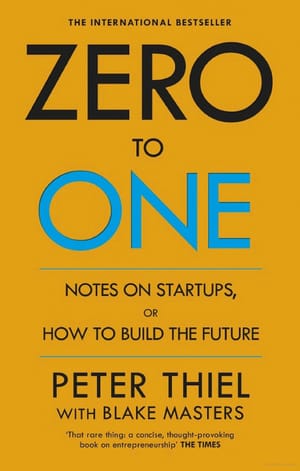
Blake Masters is best known for helping turn a famous startup lecture series into one of the most widely read books in modern startup culture. In 2012, while at Stanford Law School, he took detailed notes on Peter Thiel's CS183 course about startups and innovation. Those notes were published online, spread quickly through the technology world, and eventually became the foundation of Zero to One (2014), which credits Masters as co-author alongside Thiel.
That role matters more than it might first appear. Plenty of business books come from speeches, interviews, or classroom material, but very few become durable reference points for founders. Masters was not just a transcriber. He helped shape a loose set of lectures into a tighter body of arguments about monopoly, differentiation, contrarian thinking, and venture-scale company building. The result was a book that became standard reading in startup circles.
Early Life and Education
Blake Masters was born in 1986 in Denver, Colorado. He studied political science as an undergraduate at Stanford University and stayed on to complete a law degree at Stanford Law School. It was during law school, in the spring of 2012, that he enrolled in Peter Thiel's now-famous course on startups, CS183 — the event that would define the next decade of his public identity.
Investment and Operating Career
After the success of Zero to One, Masters moved deeper into Thiel's world of companies and institutions. He served as Chief Operating Officer of Thiel Capital, Thiel's private investment firm, and as President of the Thiel Foundation, which runs the Thiel Fellowship — the program that pays young people to skip or leave college to build companies and pursue research. Through these roles he sat close to several of the channels through which Thiel's ideas about technology, education, and entrepreneurship spread into the wider startup world.
Political Career
Masters is also widely known outside of startup circles for his entry into politics. In 2022 he ran for the United States Senate in Arizona as a Republican, winning a competitive primary with backing from Peter Thiel before losing the general election to incumbent Mark Kelly. He mounted a second campaign in 2024, running for a U.S. House seat in Arizona, but was defeated in the Republican primary. His political profile has made "Blake Masters" a heavily searched name, though his durable place in this library rests on his role in one of the defining startup books of the 2010s.
Zero to One and the CS183 Notes
The origin story is unusually important here. Peter Thiel's Stanford course was already attracting attention because it presented a coherent worldview about startups: competition destroys profits, monopoly is the goal, real progress comes from going from zero to one, and the best companies are built on truths that are not yet obvious to the crowd.
Masters' notes captured that worldview in a form that people could circulate and study. Once published, they reached far beyond the classroom. The eventual book preserved the density and provocation of the lectures while becoming much more portable. That is why Masters remains tied to the book's success. He was part of the mechanism that translated an elite classroom artifact into a widely consumed startup text.
His Intellectual Position
Masters is usually read through Thiel rather than alongside other independent startup thinkers, but that does not mean his contribution is trivial. His role sits at an interesting boundary between editor, collaborator, and co-author. He helped sharpen a style of startup argument that is concise, aphoristic, and strategically aggressive.
The language associated with Zero to One is now common enough to feel ambient in startup culture:
- startups should seek monopoly-like advantages
- founders should look for secrets or neglected truths
- the best companies create new categories instead of joining crowded ones
- power-law outcomes dominate venture returns
Masters helped package those ideas into a form founders actually read.
The Framework Behind Zero to One
Part of what makes Zero to One endure is that it is organized around questions rather than tactics. The book famously argues that every startup should be able to answer seven questions well — covering engineering, timing, monopoly, team, distribution, durability, and secret insight. A company that can answer only a few of them convincingly, Thiel and Masters argue, is likely to struggle, while the rare company that answers most of them tends to become a category-defining business.
The book's central provocation — Thiel's interview question, "What important truth do very few people agree with you on?" — runs through the whole text. Masters' contribution was to take that dense, aphoristic worldview and give it a structure readers could follow, quote, and apply. That editorial shaping is why the book reads as a coherent argument rather than a loose transcript of lectures.
Blake Masters vs. Peter Thiel: Who Wrote What?
A common question is how much of Zero to One is Masters and how much is Thiel. The honest answer is that it is a genuine collaboration built on Thiel's lectures. The ideas, examples, and contrarian worldview are Thiel's; the notes, organization, and much of the prose owe a great deal to Masters, whose original online write-ups of CS183 went viral before the book existed. Thiel is the primary intellectual author; Masters is the co-author who turned the material into a book. For a fuller treatment of the ideas themselves, see the Peter Thiel author page and the Zero to One book summary.
Why Founders Should Care
Founders should care about Masters for the same reason they care about the best editors and interpreters of important ideas: sometimes the person who helps crystallize an argument ends up shaping how an entire field talks. Startup culture did not absorb Zero to One only because Thiel taught a class. It absorbed it because that class was turned into an artifact people could circulate, quote, debate, and build on — and Masters helped create that artifact. That is his place in the startup canon.
Frequently Asked Questions
Did Blake Masters write Zero to One?
He co-wrote it. Zero to One grew out of Peter Thiel's 2012 Stanford course (CS183), for which Masters took and published detailed notes that went viral. Thiel is the primary intellectual author and source of the ideas; Masters is credited as co-author for compiling, organizing, and shaping the lectures into the finished book.
What is Blake Masters known for?
Two things: co-authoring Zero to One, one of the most influential startup books of the 2010s, and his political career — most notably his 2022 run for the U.S. Senate in Arizona.
What did Blake Masters do before politics?
He was an investor and executive in Peter Thiel's orbit, serving as Chief Operating Officer of Thiel Capital and President of the Thiel Foundation, which runs the Thiel Fellowship.
Where did Blake Masters go to school?
He earned a bachelor's degree in political science from Stanford University and a law degree (JD) from Stanford Law School, where he took the course that became Zero to One.
What are the main ideas associated with Blake Masters?
Through Zero to One, the ideas he is associated with include seeking monopoly rather than competition, looking for "secrets" (valuable truths few people agree with), building definite rather than indefinite plans, and the power-law nature of venture returns.
Professional Background
Current role: Investor, entrepreneur, and writer
Previous roles:
- Co-author, Zero to One (2014)
- Chief Operating Officer, Thiel Capital
- President, Thiel Foundation
Undergraduate: BA, Political Science, Stanford University
Graduate: JD, Stanford Law School
Themes
- Startup strategy
- Contrarian thinking
- Monopoly versus competition
- Technology and venture-scale ambition
- Turning lecture ideas into durable business writing
Popular Works
- Zero to One: Notes on Startups, or How to Build the Future (2014, with Peter Thiel)
- Peter Thiel's CS183 startup notes (2012)
Contributions
Famous Quotes
"Zero to one is the path from scarcity to abundance."
Related Founders
Elon Musk
Related Companies
PayPal
Links