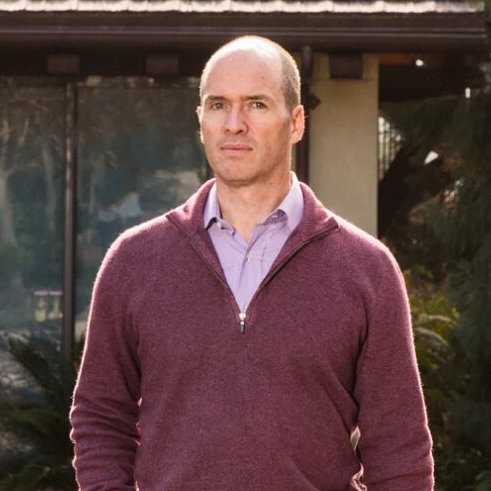
Who Is Ben Horowitz?
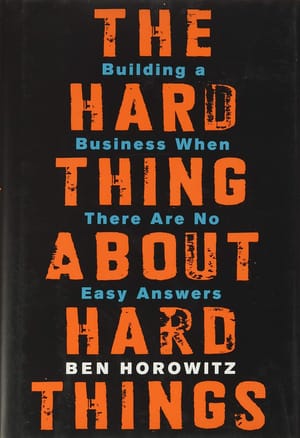
Ben Horowitz is a venture capitalist, entrepreneur, and author best known for co-founding Andreessen Horowitz (a16z), one of Silicon Valley's most influential venture capital firms, and for writing The Hard Thing About Hard Things (2014), a candid account of the psychological and operational reality of running a startup. He is widely regarded as one of the most influential voices on startup leadership, company culture, and what it actually feels like to be a CEO under pressure.
Born in London in 1966 and raised in Berkeley, California, Horowitz studied computer science at Columbia University (BA) and UCLA (MS) before entering the tech industry in the 1990s.
Career
Netscape and AOL (1990s)
Horowitz joined Netscape in 1995, where he rose to VP of the Directory and Security Product Line. When AOL acquired Netscape in 1999, he became Vice President of AOL's eCommerce division — giving him front-row exposure to the chaotic intersection of large corporate culture and fast-moving internet business.
Loudcloud and Opsware (1999–2007)
In 1999, Horowitz co-founded Loudcloud with Marc Andreessen, Tim Hoover, and In Sik Rhee — a managed hosting company that offered what would today be called cloud infrastructure. The company went public in March 2001, the worst possible timing, three months after the dot-com crash. The IPO raised just enough cash to keep the company alive.
Over the following years, he navigated near-bankruptcy, laid off hundreds of employees, and eventually pivoted the company from managed hosting into an enterprise data center automation software company, renaming it Opsware. In 2007, HP acquired Opsware for $1.6 billion — the transaction that made Horowitz financially independent and forms the backbone of the hard-won experience in his writing.
Andreessen Horowitz / a16z (2009–present)
In 2009, Horowitz and Marc Andreessen co-founded Andreessen Horowitz, known as a16z. The firm has grown to become one of the largest and most active venture capital firms in the world, with over $35 billion in assets under management and a portfolio including Airbnb, GitHub, Coinbase, Lyft, Okta, and hundreds of others.
Horowitz serves as Co-founder and General Partner at a16z — the firm does not have a traditional CEO structure. He focuses on investments in enterprise software, infrastructure, and cultural-impact companies, and has been a board member at Okta, Medium, Lyft, and others.
Ben Horowitz Net Worth
Ben Horowitz's net worth is widely estimated at around $2 billion, though as a private individual he does not disclose precise figures and estimates vary. His wealth comes primarily from two sources:
- The $1.6 billion sale of Opsware to HP in 2007. As co-founder and CEO, Horowitz held a significant equity stake in the company, and this exit made him financially independent.
- His ownership stake in Andreessen Horowitz (a16z). As a co-founder and general partner of one of the world's largest venture capital firms — which manages tens of billions of dollars in committed capital — Horowitz earns from both management fees and carried interest (the firm's share of investment profits) on a portfolio that has included Airbnb, GitHub, Coinbase, and Lyft.
The bulk of his wealth is therefore tied to private company equity and fund interests rather than publicly traded holdings, which is why estimates range widely. He and his wife Felicia have donated to Columbia University (the Elissa Horowitz Scholarship Fund) and support the a16z Cultural Leadership Fund, focused on increasing diversity in technology.
He currently lives in Las Vegas, Nevada.
Ben Horowitz: Quick Facts
|
|
| Full name |
Ben Horowitz |
| Born |
1966, London, England |
| Age |
59 (as of 2026) |
| Raised |
Berkeley, California |
| Nationality |
American |
| Education |
BA Computer Science, Columbia University; MS Computer Science, UCLA |
| Known for |
Co-founding Andreessen Horowitz (a16z); author of The Hard Thing About Hard Things |
| Spouse |
Felicia Horowitz |
| Estimated net worth |
~$2 billion |
| Current home |
Las Vegas, Nevada |
Horowitz was born in London in 1966 to American parents — his father, David Horowitz, was a well-known writer and political commentator — and the family moved to Berkeley, California, when he was young. He is American, and his notable ancestry has been the subject of frequent search interest, but he is best known publicly for his work in technology and venture capital rather than his personal background.
Ideas and Philosophy
Horowitz is known for a handful of frameworks that have become standard vocabulary in startup culture:
Wartime CEO vs. Peacetime CEO. When a company faces an existential threat, it needs a CEO who moves fast, cuts through consensus, and prioritizes survival above all else. In calm times, the same aggression becomes destructive. Knowing which mode you're in — and adapting accordingly — is one of the core skills of startup leadership.
Lead bullets, not silver bullets. When a startup is losing to a competitor, the instinct is to find a clever strategic move that changes everything. In reality, the answer is almost always to outwork and outexecute — better product, faster iteration, better customer service. The silver bullet almost never exists.
"Take care of the people, the products, and the profits — in that order." Horowitz's hierarchy of priorities, placing people first and profit last, reflects his belief that great companies are built by great teams, and that treating people well is both the right thing and the smart thing.
The Struggle. His most personal contribution: the honest acknowledgment that running a company through difficulty is psychologically brutal, that most founders experience it, and that pretending otherwise is both dishonest and unhelpful to the next generation of founders.
Books
The Hard Thing About Hard Things (2014)
Horowitz's debut book is part memoir, part management manual. It covers his years at Loudcloud and Opsware — the near-bankruptcies, the painful layoffs, the moments of total uncertainty — and extracts practical advice on topics most business books avoid: how to fire a friend, how to manage your own psychology when the company is in crisis, how to lay people off with dignity, and what to do when there are no good options, only least-bad ones.
The book became a New York Times bestseller and is widely assigned in entrepreneurship courses. It is one of the most cited books among startup founders and investors.
What You Do Is Who You Are (2019)
His second book takes a different angle: company culture. Rather than offering a framework for culture-building, Horowitz examines historical figures — Toussaint Louverture, Genghis Khan, Shaka Senghor, the samurai — and extracts lessons about how leaders create cultures through specific, concrete behaviors. The argument is that culture is not what you say it is; it is what you do, especially under pressure.
The book was also a New York Times bestseller.
Podcasts and Interviews
Must-watch talks
- Stanford eCorner: "Nailing the Hard Things" (Nov 2014) — full ETL talk, video + transcript: stvp.stanford.edu
- Y Combinator "How to Start a Startup" — Lecture 15: "How to Manage" (2014): YouTube
- SXSW: "The Hard Thing About Hard Things" (Mar 2014): YouTube
- Talks at Google: "What You Do Is Who You Are" (Nov 2019): YouTube
Podcast episodes
- The Tim Ferriss Show #392 (Oct 2019): tim.blog
- The Jordan Harbinger Show #270 (Oct 2019): art19.com
- Computer History Museum CHM Live (Nov 2019): YouTube
- a16z Podcast: "Companies & Culture" (Mar 2021): a16z.com
The Ben & Marc Show (2024–ongoing)
A recurring video and podcast series co-hosted with Marc Andreessen, covering technology, venture capital, media, and culture.
Professional Background
Current role: Co-founder and General Partner at Andreessen Horowitz
Previous roles:
- CEO and Co-founder of Opsware (formerly Loudcloud)
- Vice President, eCommerce Division at AOL
- VP, Directory & Security Product Line at Netscape; earlier Product Manager at Netscape
- Product roles at Lotus Development
Undergraduate: BA, Computer Science, Columbia University
Graduate: MS, Computer Science, UCLA
Current: Okta, Medium
Past: Lyft (2016–2020), Foursquare (board observer)
Themes
- Leadership under pressure
- Building and scaling companies
- Company culture
- Venture capital insights
- Management philosophy
- Decision-making under uncertainty
Influences
- Andy Grove
- Bill Campbell
- Hip-hop culture and artists
Popular Works
- The Hard Thing About Hard Things: Building a Business When There Are No Easy Answers
- What You Do Is Who You Are: How to Create Your Business Culture
- Foreword to Andrew Chen’s The Cold Start Problem
Awards
- New York Times bestseller (both books)
- Financial Times & McKinsey Business Book of the Year — longlist (2014) for The Hard Thing About Hard Things
Podcast Appearances
- The Tim Ferriss Show (#392)
- The Ben & Marc Show / a16z Podcast (frequent guest)
Philanthropy
- Established/Supports the a16z Cultural Leadership Fund
- Donor to Columbia University (Elissa Horowitz Scholarship Fund)
Contributions
Venture Capital: Co-founded a16z; the firm reports ~$46B in committed capital
Portfolio Examples: Airbnb, GitHub, Coinbase, Lyft
Cultural Impact: Popularized 'peacetime vs. wartime CEO' framing; integrates hip-hop and history into business writing
Mentorship: Advisor to many founders/CEOs; created a16z’s Cultural Leadership Fund
Famous Quotes
“There are no silver bullets for this, only lead bullets.”
“We take care of the people, the products, and the profits — in that order.”
Related Founders
Marc Andreessen
Links