Who Is Marc Andreessen?
Marc Andreessen is one of the few people in technology history who has shaped the industry twice — once as a founder building product, and once as an investor backing the founders who came after him. He co-created the Mosaic web browser in 1993, making the internet accessible to non-technical users for the first time. He co-founded Netscape, which launched the commercial web era with its 1995 IPO. And he co-founded Andreessen Horowitz (a16z) in 2009, which became one of the most influential venture capital firms of the last fifteen years.
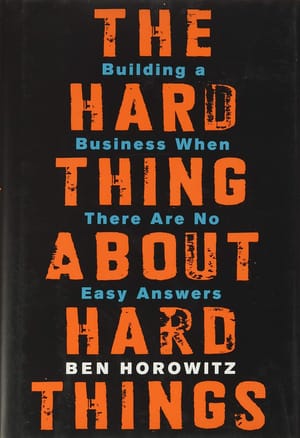
For startup founders, Andreessen is interesting on multiple levels. He is a central character in the founding of the modern internet — the events he participated in during the 1990s still shape the infrastructure and business models of every tech company being built today. He is also one of the most prolific public thinkers on technology and markets, through essays, blog posts, and the a16z media operation. And he is the subject of one of the most honest portraits of a co-founding relationship in startup literature, through Ben Horowitz's account of their partnership in The Hard Thing About Hard Things.
Career
NCSA Mosaic (1992–1993)
Andreessen grew up in New Lisbon, Wisconsin and studied computer science at the University of Illinois Urbana-Champaign. In 1992, while working a part-time job at the National Center for Supercomputing Applications (NCSA) for $6.85 an hour, he began building what would become Mosaic — the first web browser with a graphical interface that could display images inline with text.
He recruited Eric Bina, another NCSA programmer, and the two built the first version of Mosaic in about two months. It was released in January 1993 and was available as a free download. Within a year, an estimated two million people were using it. For context: before Mosaic, accessing the World Wide Web required technical knowledge of command-line tools. After Mosaic, anyone with a computer and a modem could navigate the internet visually. It is difficult to overstate the impact.
After graduating in December 1993, Andreessen moved to Silicon Valley. He was 22.
Netscape (1994–1999)
Shortly after arriving in California, Andreessen was approached by Jim Clark, the founder of Silicon Graphics and one of Silicon Valley's most prominent entrepreneurs. Clark had been looking for his next venture. The two co-founded Mosaic Communications Corporation, which was later renamed Netscape Communications.
Netscape Navigator, released in 1994, was a commercial version of the browser technology Andreessen had developed at NCSA. It was faster, more stable, and included features like SSL encryption for secure transactions — the technical foundation of online commerce. Netscape gave the browser away for free and planned to make money on the server software that enterprises and ISPs would need to connect to the web.
Netscape's IPO on August 9, 1995 is one of the most significant dates in business history. The company had been profitable for only one quarter. It had existed for 16 months. On its first day of trading, the stock opened at $28, rose to $75, and closed at $58. The IPO is widely credited with igniting the dot-com boom and establishing the model — raise venture capital, grow fast, go public early — that defined technology startups for the next decade.
Microsoft's response — the "Internet Tidal Wave" memo from Bill Gates in May 1995, and the subsequent bundling of Internet Explorer with Windows for free — is one of the most studied competitive battles in technology history. By 1998, Internet Explorer had overtaken Netscape in market share. AOL acquired Netscape in November 1998 for $4.2 billion.
Loudcloud and Opsware (1999–2007)
After the AOL acquisition, Andreessen connected with Ben Horowitz, who had been working at Netscape and then in AOL's eCommerce division. In 1999, the two co-founded Loudcloud along with Tim Hoover and In Sik Rhee — a managed cloud hosting service for internet companies at a time when most companies were building their own server infrastructure.
Andreessen's role at Loudcloud (and later Opsware, the enterprise software company it became after the managed hosting business was sold) was as chairman and strategic advisor, not as an operating executive. Horowitz was CEO. This division of labor would define their partnership from that point forward. Andreessen provided market perspective, fundraising relationships, and the credibility of the Netscape pedigree. Horowitz made the daily decisions, managed the team, and carried the existential weight of a company that was repeatedly near failure.
The full account of those years is in Horowitz's book. From Andreessen's perspective, the Opsware period was formative in a specific way: he watched his co-founder navigate scenarios — near-bankruptcy, large layoffs, a competitor with deep pockets — for which there was no playbook. That experience shapes how he thinks about the difference between strategic advice and operational reality, and it shapes what a16z looks for in founders.
Andreessen Horowitz / a16z (2009–present)
Andreessen and Horowitz co-founded Andreessen Horowitz in June 2009 with $300 million in initial capital. The firm was founded on an explicit thesis about how venture capital should work differently: not as money plus occasional board advice, but as an operating services platform. a16z built internal teams for recruiting, business development, marketing, and legal support — services that would previously have required the portfolio company to hire for itself.
The timing was excellent: 2009 was the year of the smartphone, the rise of cloud computing, and the beginning of the social media era. Early investments included Airbnb (2009), GitHub (2012), Coinbase (2013), and later Lyft, Slack, and many others. The firm raised successively larger funds and by the early 2020s was managing over $35 billion in committed capital, making it one of the largest venture capital firms in the world.
Andreessen has focused increasingly on essay-writing and public intellectual work. His 2011 Wall Street Journal essay "Software Is Eating the World" became one of the most cited documents in technology venture capital. His 2023 essay "Why AI Will Save the World" reflects the same analytical posture applied to the current moment.
Marc Andreessen Net Worth
Andreessen's net worth is estimated at approximately $1.7 billion, though the figure is highly sensitive to the valuations of a16z's portfolio companies, which are largely illiquid. His wealth comes primarily from his equity in the a16z management company and from carried interest — a share of the profits from successful investments. The Netscape IPO and subsequent AOL acquisition provided his initial capital to co-found a16z.
For reference, his a16z co-founder Ben Horowitz is estimated at similar levels. Neither discloses precise figures.
Ideas and Philosophy
"Software is eating the world." Andreessen's 2011 essay argued that every major industry was being transformed or disrupted by software companies — that the defining economic opportunity of the following decade was to take industries that had been built on atoms (physical goods, human labor, paper processes) and rebuild them on bits. In 2011 this was a contrarian argument; most investors were still skeptical that software could dominate industries like finance, healthcare, or transportation. The essay is now accepted as obviously correct, which is a measure of how fully the thesis played out.
Product-market fit as the primary objective. Andreessen popularized the term "product-market fit" through his PMARCA blog series (2007), drawing on Andy Rachleff's original concept. His formulation: "the only thing that matters is getting to product-market fit." Before PMF, nothing else — team quality, market timing, fundraising strategy — matters enough to optimize. After PMF, everything else becomes secondary to scaling into the fit you've found. This has become the dominant framework for evaluating early-stage startups.
Timing as the most critical factor. Andreessen often argues that timing matters more than idea quality or even execution in determining startup outcomes. Netscape succeeded partly because it was launched at the exact moment when internet connectivity was becoming widely available to consumers. Loudcloud failed partly because it was launched as a cloud services company before the enterprise market was ready to outsource infrastructure. Many failed startups, in his view, were right about the opportunity but wrong about when it would arrive.
The PMARCA Guide to Startups. From 2007 to 2009, Andreessen published a series of blog posts on startup strategy — covering product-market fit, the right market to enter, how to build a team, fundraising, and the psychology of founding. The series was not published as a book but is widely read and cited. It represents a distinct intellectual tradition from the Ben Horowitz school of startup advice: where Horowitz writes from the trenches of operational crisis, Andreessen writes from the perspective of pattern recognition across hundreds of companies.
Marc Andreessen in Startup Books
The Hard Thing About Hard Things
Andreessen is the most important secondary figure in Ben Horowitz's The Hard Thing About Hard Things. He is not the subject of the book — Horowitz is — but the texture of their partnership permeates it. Horowitz makes clear that Andreessen was not just his co-founder but his primary sounding board during the most difficult periods of Opsware's near-death experiences.
The portrait that emerges is genuinely illuminating about the complementarity that makes co-founding partnerships work. Andreessen's strength was market perspective and fundraising: he could read where the technology industry was heading, who the key players were, and how to position Opsware in those conversations. Horowitz's strength was operations: he could manage the daily reality of a company with hundreds of employees, multiple customer contracts, and a stock price near zero, while simultaneously making decisions about layoffs, product direction, and investor communications.
Horowitz credits Andreessen with giving him the key insight that shaped his management of the Opsware crisis: that the worst possible thing a CEO can do in a crisis is to pretend to the team that everything is fine. The alternative — radical transparency about the severity of the problem, combined with a specific plan — is counterintuitive but more effective. People can handle bad news if they believe leadership has a real response to it.
Andreessen also appears in the book in his role during the Loudcloud IPO, the sale of the Loudcloud managed hosting business to EDS (which was the transaction that converted the company into Opsware), and the eventual sale to HP. At each major inflection point, the account shows him as a source of strategic clarity and as someone who could help Horowitz see options that were not visible from inside the operational fog.
The book's most instructive passage about Andreessen describes a conversation in which Horowitz asks him how to handle a specific management problem — and Andreessen responds not with an answer but with the right question. It is a portrait of a co-founder who understands that the CEO's job is not to be given answers but to develop the clarity to find them.
Related Reading on Startupbooks.com
- The Hard Thing About Hard Things — Ben Horowitz's account of building Loudcloud and Opsware, in which Andreessen appears as a co-founder and strategic partner during the company's most difficult years
Career
Current: Co-founder and General Partner at Andreessen Horowitz (a16z)
- Co-founder and CTO of Netscape Communications
- Co-creator of NCSA Mosaic browser (1993)
- CEO of Loudcloud (co-founded with Ben Horowitz)
Key Themes
- Software as infrastructure
- Technology as leverage
- Venture capital as product
- The role of timing in startup success
Famous Quotes
"Software is eating the world."
"The most important thing is to be in the right market at the right time."
Further Reading