Who Is Reid Hoffman?
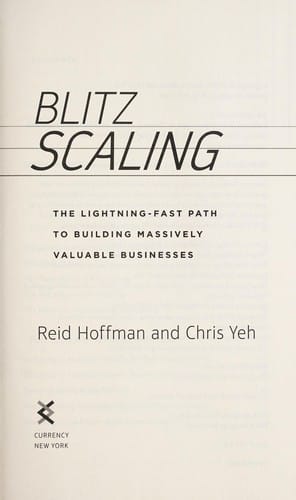
Reid Hoffman is the co-founder of LinkedIn, a partner at Greylock Partners, and the author of Blitzscaling — the most influential book on hypergrowth strategy in modern startup literature. He is one of the central figures of the so-called PayPal Mafia, the group of PayPal alumni who went on to found or fund Tesla, SpaceX, YouTube, Palantir, and dozens of other major technology companies. Among that group — which includes Elon Musk, Peter Thiel, Max Levchin, and David Sacks — Hoffman is perhaps the most institutionally influential: his combination of company-building experience, venture capital reach, and intellectual productivity has shaped how Silicon Valley thinks about scaling, talent, and the nature of competitive advantage.
Hoffman grew up in the San Francisco Bay Area and studied Symbolic Systems at Stanford — a multi-disciplinary major combining computer science, philosophy, linguistics, and cognitive science. He won a Rhodes Scholarship and studied philosophy at Oxford before deciding that academia's limited leverage was not the right vehicle for the kind of impact he wanted to have. He returned to California, joined Apple, attempted a first startup (Socialnet.com), joined PayPal, and then founded LinkedIn in 2002 — all before the age of 35.
LinkedIn and the PayPal Mafia
The PayPal story is central to understanding Hoffman's approach to company building. When he joined PayPal in 1999 as a board member and then Executive Vice President, the company was fighting simultaneously for survival against fraud, regulators, and well-funded competitors. The team that Thiel assembled — and that Hoffman was part of — was extraordinarily talent-dense, and the experience of building under that kind of pressure, with that caliber of peers, shaped everything Hoffman did afterward.
PayPal was acquired by eBay in 2002 for $1.5 billion. With his share of the proceeds, Hoffman could have retired or moved into pure investing. Instead, he used the capital and the relationships from PayPal to found LinkedIn, launching it out of his living room in Mountain View in late 2002 and opening it publicly in May 2003.
LinkedIn's growth was not immediate or dramatic. The platform reached one million users in its first year, thirty million by 2008, and 175 million by the time of Microsoft's acquisition in 2016. But the growth was steady and defensible — LinkedIn was solving a genuine problem (professional identity and connection in the internet age) in a market with strong network effects (each new professional who joined made the network more valuable for everyone else), and those two factors combined to create a platform with durable competitive advantages.
Hoffman's decision to step back from the CEO role in 2008 and bring in professional management — first Dan Nye, then Jeff Weiner — is often cited as an example of founder self-awareness. He recognized that the skills required to found and grow LinkedIn to 30 million users were different from the skills required to grow it from 30 million to 175 million, and he made the transition while the company still had momentum rather than waiting for a crisis to force the change.
The Microsoft acquisition in 2016 validated LinkedIn's position as an irreplaceable infrastructure layer of the professional internet. At $26.2 billion — roughly 87 times annual earnings — it was an extraordinary outcome that reflected both the strategic value of LinkedIn's network and data and Microsoft's recognition that professional identity and connection would be central to the future of enterprise software.
LinkedIn in Startup Literature
LinkedIn appears in startup literature primarily through two lenses: as a case study in network effects and platform strategy, and as the institutional home of the blitzscaling framework.
In Blitzscaling, Hoffman uses LinkedIn as his primary first-person case study for the challenges and costs of hypergrowth. He is unusually candid about the mistakes he made: hiring the wrong executives at the wrong stages, failing to build management infrastructure fast enough to keep pace with organizational growth, and making product decisions that prioritized short-term growth metrics over long-term user trust. These honest reflections make LinkedIn a more useful case study than the sanitized success stories that characterize most founder autobiographies.
LinkedIn also features prominently in discussions of professional network effects — the way that each new professional who joins makes the network more valuable for all existing users, creating a flywheel that is extremely difficult for competitors to break. Microsoft's investment in LinkedIn is partly a bet on the durability of those network effects as AI changes the nature of professional work.
Lessons for Founders
Several lessons from Hoffman's career are particularly valuable for founders thinking about company building at scale.
Network effects are the most powerful form of competitive advantage, but they require specific conditions to activate. Not every business has network effects, and trying to blitzscale a business without genuine network effects is a reliable path to bankruptcy. The first question for any founder considering aggressive growth should be: what is the specific mechanism by which each new user makes the product more valuable for existing users? If there is no clear answer, the blitzscaling playbook probably does not apply.
The skills required at different stages of company growth are fundamentally different, and founders who don't adapt will become bottlenecks. Hoffman's decision to step aside as CEO at LinkedIn is a model for how to handle the founder-to-professional-management transition. The alternative — founders who refuse to adapt their management style as the company grows — is one of the most common and most costly failure modes in startup history.
Speed is a strategic weapon in winner-take-most markets, but it is not free. Every decision to prioritize speed over efficiency creates costs — technical debt, cultural debt, compliance failures, reputational damage — that must eventually be paid. The question is not whether to incur these costs but whether the market position gained justifies them. Founders who blitzscale without asking that question often find that they've won the market race but created operational problems that consume the value they worked so hard to build.
The most valuable network is the one you build with other high-quality people early in your career. Hoffman's own career — shaped enormously by the PayPal experience and the relationships he built there — is a demonstration of his Start-up of You thesis in practice. The founders who have the best second and third acts are usually those who invested in genuine relationships with other talented people during their first act, creating a network that provides capital, advice, talent, and opportunity throughout their careers.
Career
Current: Partner at Greylock Partners; Co-founder of Inflection AI
- EVP at PayPal
- CEO of LinkedIn (2002–2008)
Related Companies
LinkedIn
Key Themes
- Network effects
- Blitzscaling
- Platform strategy
- PayPal Mafia
Famous Quotes
"An entrepreneur is someone who jumps off a cliff and builds a plane on the way down."
"If you are not embarrassed by the first version of your product, you've launched too late."
Further Reading